



















(This Black History Month article first appeared in the February print edition of the Hendersonian)
If you want to learn something about the American experience that led to the Civil Rights movement of the 1960s—and beyond—the National Civil Rights Museum at the Lorraine Motel is your place.
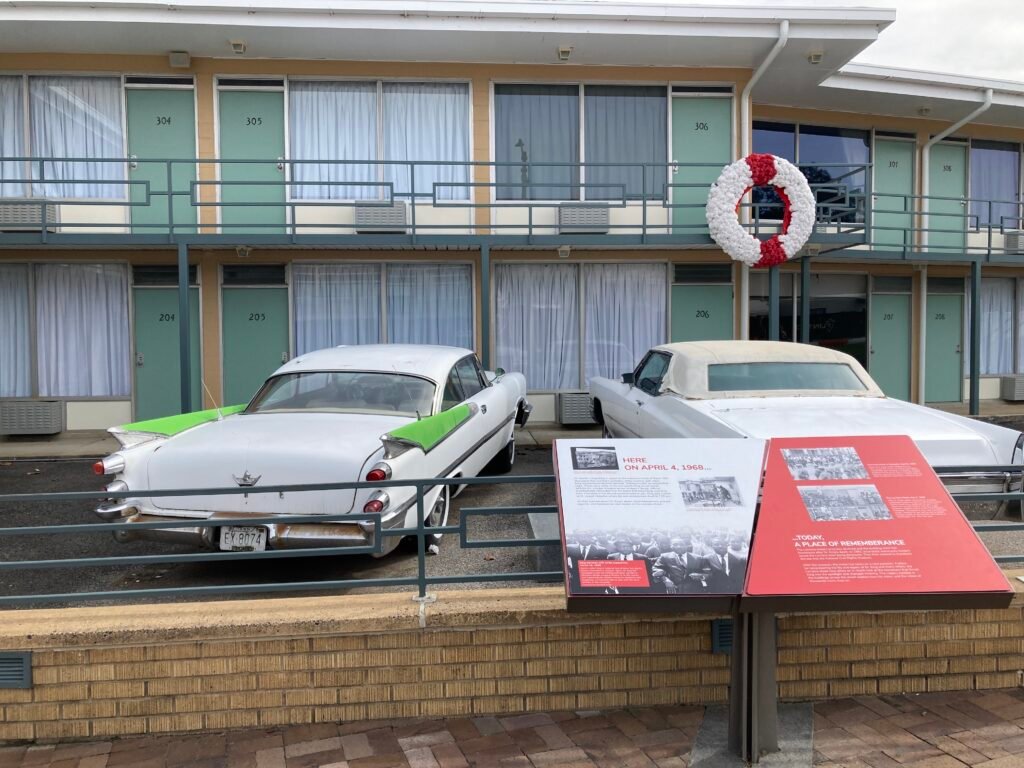
Located in Memphis near downtown, the museum exhibits start with the gut-wrenching story of slavery in America and wind through many, many decades of related social justice topics until your walk through the room at the Lorraine Motel, where Dr. Martin Luther King, Jr. was assassinated.
In addition to the opening and closing chapters, the museum’s permanent exhibits detail the Montgomery Bus Boycott of 1955-56, student sit-ins and protests of 1960, the Freedom Rides of 1961 and movements for change that were built on the legacy left by Dr. King.
It’s a place every American can benefit from visiting.
Dr. King was killed on April 4, 1968, four years after the landmark Civil Rights Act of 1964 was passed by Congress and signed into law by President Lyndon B. Johnson.
That extraordinary legislation outlawed, for the first time in American history, discrimination based on race, color, religion, sex or national origin, ending segregation in public spaces (like restaurants, theaters, hotels) and public education, prohibiting employment discrimination and preventing discrimination in federally funded programs.
A visitor can easily spend several hours absorbing the personal stories, the oral histories and the artifacts within the museum, though a quick overview can probably be accomplished in about two hours.
In addition to the permanent exhibits, special temporary exhibits are also part of the experience.
Here’s a capsule about the museum’s core sections:
• A Culture of Resistance: Slavery in America, 1619-1961. This is graphic representation of the global impact of slavery. The exhibit follows a floor map of North and South America, Europe and Africa and provides statics and information about the Atlantic slave trade.
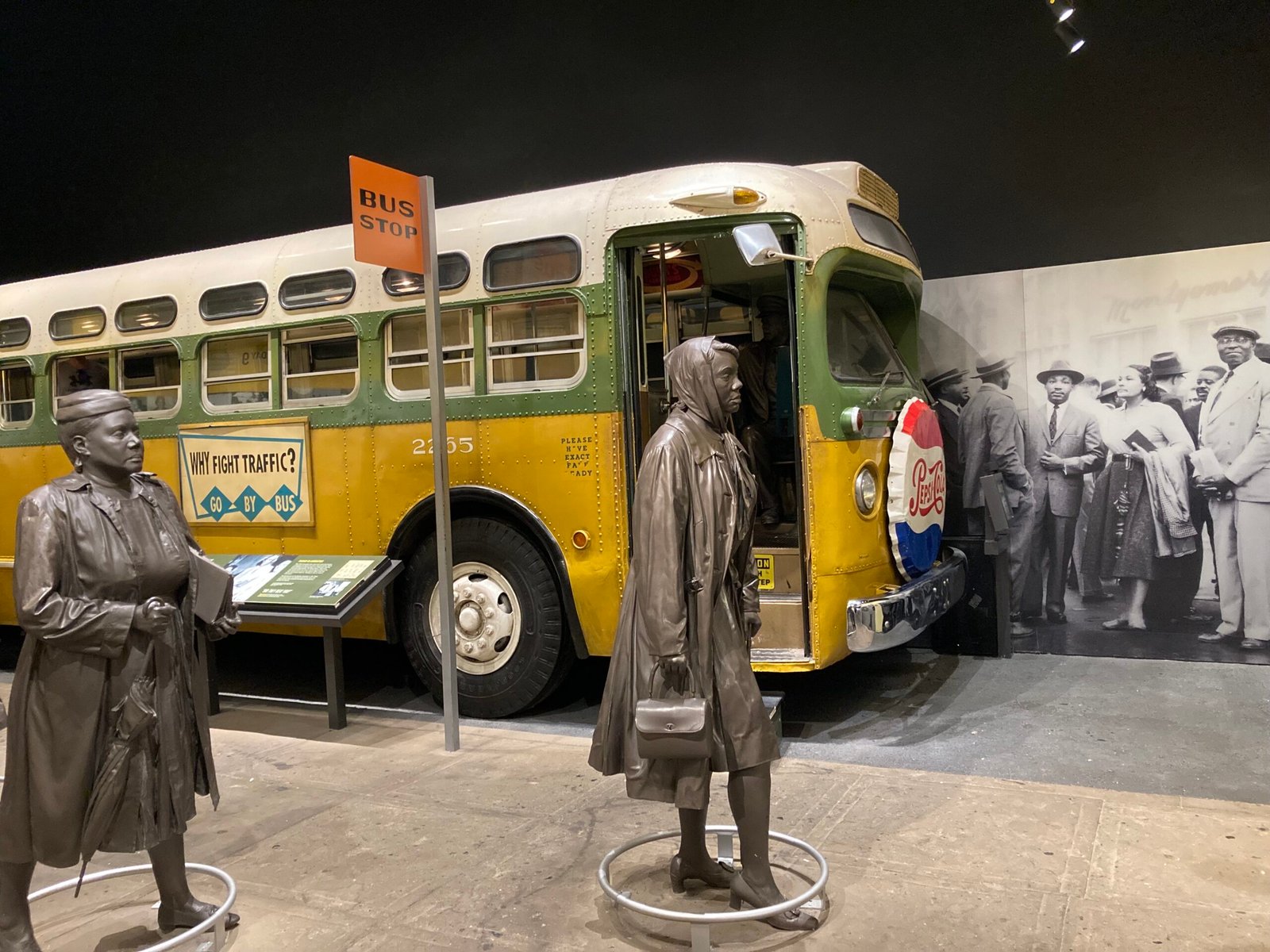
• The Year They Walked: Montgomery Bus Boycott, 1955. This is one of the museum’s original exhibits. A centerpiece of it is a city bus, and visitors can hear audio about what was going on after boarding the bus. Three-dimensional figures on the sidewalk represent the women of Montgomery who sustained the boycott. Dr. King is highlighted as an emerging leader of the movement, and there’s audio of his speech that was delivered on the first night of the boycott.
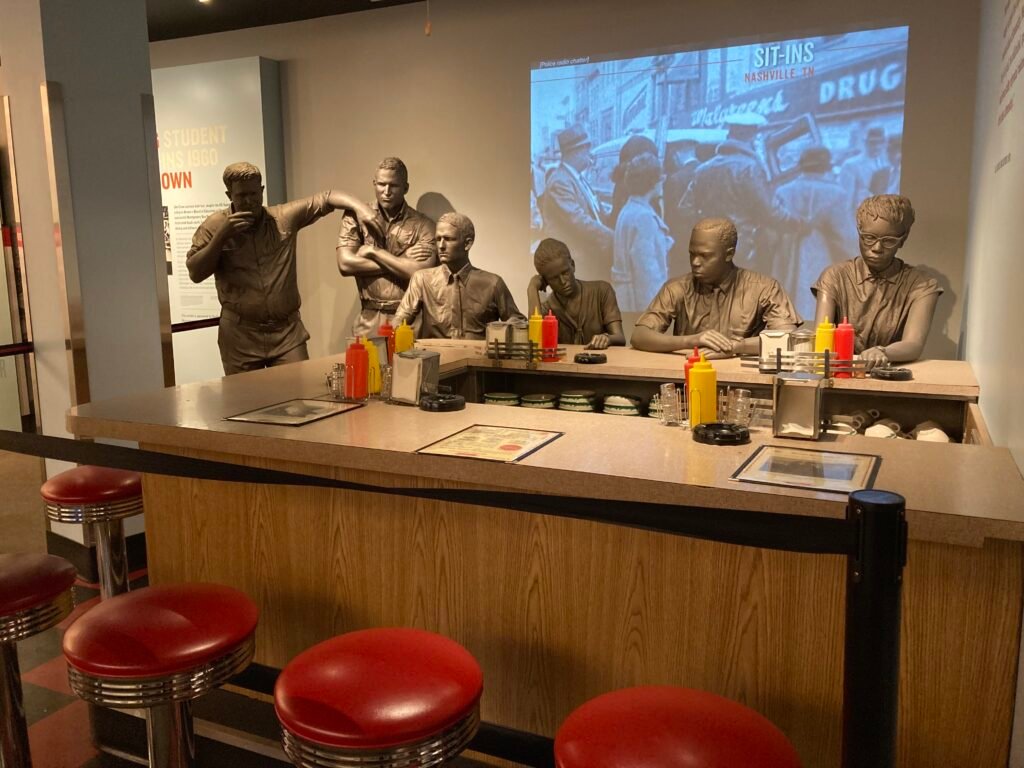
• Standing Up By Sitting Down: Student Sit-Ins, 1960. The original lunch counter is displayed along with three-dimensional figures sitting at the counter being confronted by their adversaries. A film is projected behind the protesters. Through multi-touch, multi-user interaction, visitors engage in boycott stories from across the country.
• We Are Prepared To Die: The Freedom Rides, 1961. Following a 1960 Supreme Court decision outlawing segregation in bus and train terminals, the Congress of Racial Equality initiated a new Freedom Ride in 1961. The Student Nonviolent Coordinating Committee stepped in and took over the rides, sending hundreds of young people into the south. This exhibit also highlights the Kennedy administration’s reluctance to step into the conflict during this Cold War period. In addition, histories of six Freedom Riders who were imprisoned in Parchman Penitentiary in Mississippi are available.
• What Do We Want: Black Power. Interpretation of the Black Power movement explains it as a continuation of the Civil Rights Movement rather than a radical new movement.
Though Dr. King’s legacy is a thread through the entire museum, the museum displays that focus on his life, his work, his vision and his accomplishments are extensive and lead to the Lorraine Motel. There’s a timeline of monumental Civil Rights accomplishments and events.
If you go:
The National Civil Rights Museum at the Lorraine Motel, established in 1991, is located at 450 Mulberry Street, in the heart of the South Main District in downtown Memphis.
Free parking is available for museum guests. To enter the visitor lot, turn north on Mulberry Street from G.E. Patterson Avenue.
The museum is a Smithsonian affiliate.
About the Lorraine Motel:
• The Lorraine was one of only a few hotels to which African-American travelers could enjoy overnight accommodations during the segregated eras leading up to the late 1960s in America.
• In addition to Dr. King’s many stays at the Lorraine, songwriters and musicians working with Stax Records were frequent residents of the Lorraine. Recording stars Ray Charles, Lionel Hampton, Aretha Franklin, Ethel Waters, Otis Redding, The Staple Singers and Wilson Pickett were among the many who stayed in the Lorraine during the late 1950s and early 1960s.