












(This article first appeared in the February print edition of the Hendersonian.)
The western faction of the first protest march on Washington, D.C., visited this area in mid-June 1894 but Henderson’s chilly reception prompted it to quickly move on to Evansville.
The 1893 Depression was the country’s worst up to that point. Unemployment shot up to 18 percent and stayed high for five years. There was no safety net. Panhandlers were everywhere. The Gilded Age wasn’t so golden for the common man.
Jacob S. Coxey of Massillon, Ohio, thought he had a solution that would ease the money supply and build roads—a national public works relief system. He proposed marching an “industrial army” of the unemployed to Washington to convince Congress. Some viewed it as the opening campaign of the long-threatened class war.

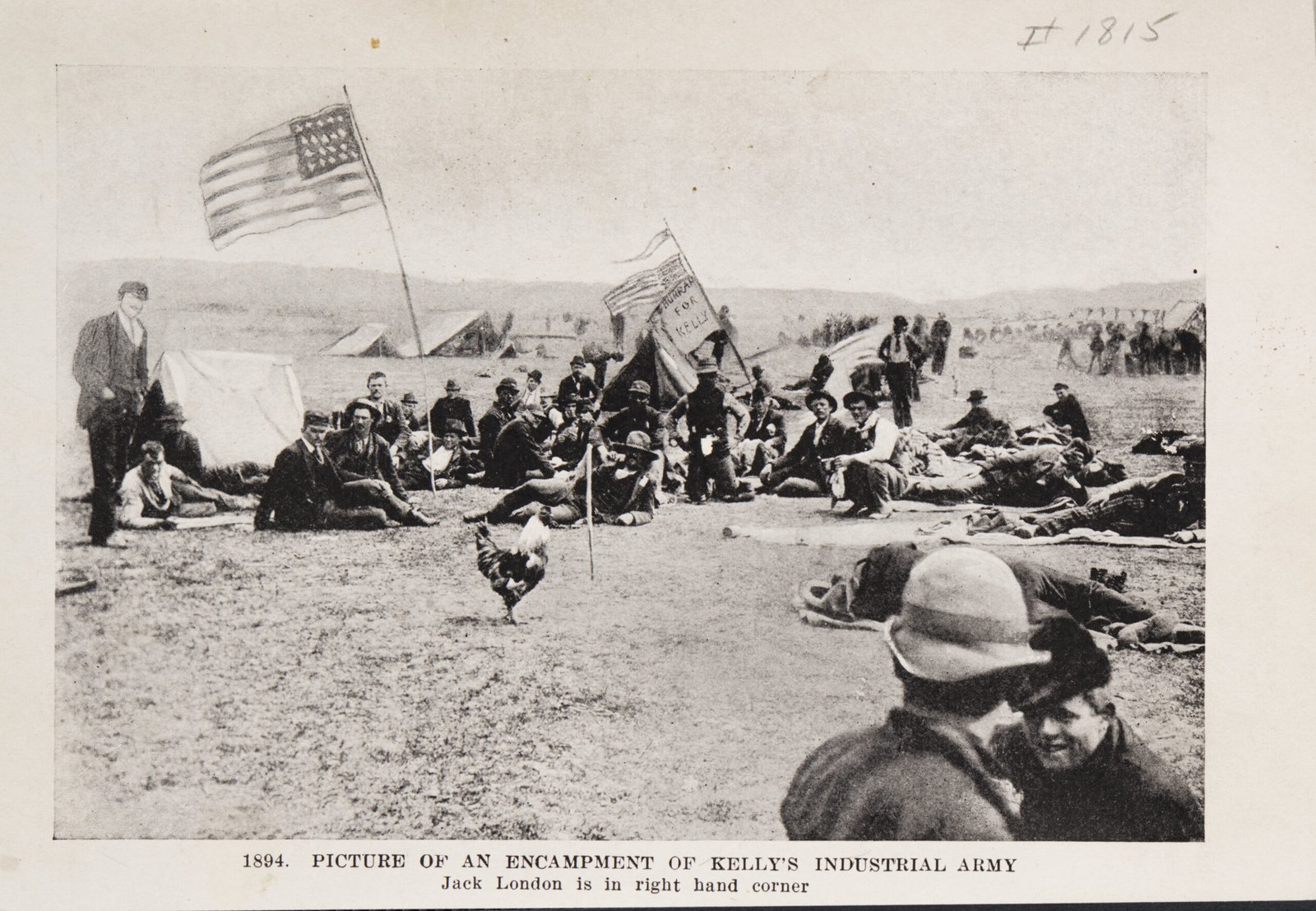
Dozens of similar armies formed around the country. The largest, about 2,000 organized in the San Francisco area by Charles T. Kelly, was the one that visited Henderson.
It was also the most colorful. One of its top officers was an anarchist and split from Kelly alleging embezzlement—but the main disagreement appeared to be Kelly wasn’t radical enough.
An 18-year-old Jack London, who was later to become a best-selling author, traveled with Kelly for a large segment of the trip. But he was mostly a pain in Kelly’s hindquarters.
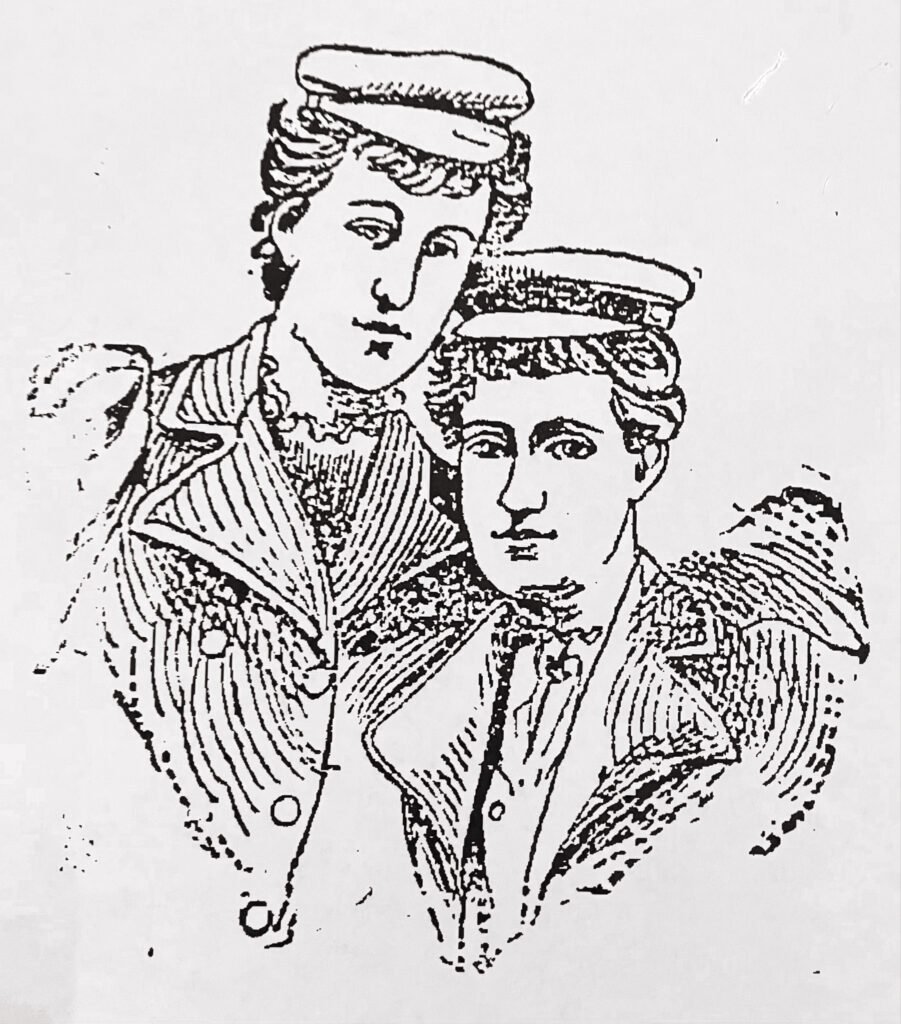
Then there were the two “angels,” also called “engine heroines,” who helped steal a Union Pacific freight train in Council Bluffs, Iowa, to provide transportation when the army stalled.
William “Buffalo Bill” Cody donated three steers from his North Platte, Nebraska, ranch to help feed the hungry unemployed. Many others along the line of march did the same; the army subsisted on donations of food and money. Jack London, who kept a diary during the trip, wrote:
“They turned out with their wagons and carried our baggage and gave us hot lunches at noon by the wayside; mayors of comfortable little towns made speeches of welcome and hastened us on our way; deputations of little girls and maidens came out to meet us and the good citizens turned out by the hundreds, locked arms, and marched with us down their main streets.”
Freight trains provided transportation from California to the Missouri River (mostly just to keep them moving) but Eastern railroads declined to set the dangerous precedent of letting people ride for free.
On April 20, Edna Harper and Anna Hooten of Omaha led 800 of them to steal a freight train at Council Bluffs to take them farther east. Kelly politely declined the free train; he didn’t want to be seen as a lawbreaker. That act made the “angels” nearly as famous as Kelly himself.
Kelly thought they deserved to be sheltered from prison and took them under his protection, according to a 1983 article in “The Annals of Iowa” by Carlos A. Schwantes. “During the trip downriver, Kelly made every effort to ensure that morality prevailed: At night Hooten and Harper slept in a special tent guarded from a discreet distance by three men. No one was allowed to go near.”
The army walked the roughly 130 miles from Council Bluffs to Des Moines—at which point the men refused to walk farther because their feet were sore.
Des Moines fed them for a month before it became clear that was unsustainable. The next step was to build flat-bottomed boats with donated lumber and float down the Des Moines River to the Mississippi and then up the Ohio, according to Schwantes.
That was when Jack London and nine other men began causing trouble. London had plenty of experience on the water and didn’t take long to gain a half-day lead on the main flotilla.
London later freely admitted they represented themselves as the advance boat—and confiscated the best items that had been donated. They drank only “pale Vienna”—coffee brewed in milk. “My, but the 10 of us did live fine on the fat of the land.” Their spree came to an end only when Kelly sent riders down the riverbank to warn farmers about the freeloaders.
The entire trip appears to have been either feast or famine. The army received either the cold shoulder or was greeted as comrades in the struggle against hard times. Evansville newspaper coverage was polarized; reporters appeared more sympathetic, while their superiors penned vitriol-laced editorials.
The Evansville papers began taking notice of Kelly’s Army about June 1, 1894, when it was still in St. Louis. The Journal reported preparations for a reception by labor organizations and said Evansville had many jobless men expected to join the army. The Courier reported Kelly’s advance men had called on the mayor to see about city assistance. The mayor assured them he was “entirely friendly to the army” but city government was legally constrained from helping.
The Courier of June 7 reported Police Chief George Covey as saying, “They will not land here if I can prevent it” because of smallpox fears. “The majority of them are tramps, plain and simple, and it would take two weeks to get them out of town again if once they land.”
The Journal of June 10 reprinted a Paducah News story that said, “the unwelcome guests were kept out of Cairo (Illinois) by the force of special deputies.” The army took a steamboat to Paducah the next day—with passage paid for by Mound City’s government and citizens of Cairo.
The June 13 Courier noted representatives of the 180 anarchists who had split off in St. Louis were in town warning of Kelly’s purported dishonesty. They said Kelly exaggerated the size of his navy to get larger donations.
So, that throws a little different light on an item in the June 15 Pueblo (Colorado) Daily Chieftain with a Henderson dateline of June 14:
“Kelly’s army, numbering 1,200 on three barges, landed just below the city at noon today. Kelly called on Mayor (Pro Tem J.B.) Johnston and demanded aid, saying that if it was refused he would turn the entire herd loose. The mayor told him to do as he liked, also adding that they would be controlled by the city authorities.”
Kelly’s Army stayed a little more than three hours about a mile below Henderson and received no rations. “They would probably have liked to remain in Henderson for a few days, but the citizens of Henderson are rather particular about what kind of company they keep, and the authorities notified Kelly and his followers to keep moving,” according to the Courier of June 15.
“During their sojourn there the fleet was visited by hundreds of men and boys to see what the aggregation looked like, while many ladies viewed the gang from the top of the bank.”
It was a smelly gathering, according to Capt. Lee Gordon, a pilot on the Grace Morris, which towed the barges from Paducah. He estimated the group at about 500, although Kelly said the official roster was 1,154.
“This is a trip I will not forget as long as I live,” Gordon told the Courier. “They are dirty and many of them are lousy. The stench that comes from that crowd of hobos … is sickening.” Some were relatively clean, he conceded, “but the majority of them are not on intimate terms with soap and water.”
(A lack of privacy may have contributed to that lack of hygiene. Jack London deserted the army in Hannibal, Missouri, but in Iowa, he noted, “we would have to go for miles to find a secluded spot in which to bathe or make our toilet.”)
Gordon didn’t entirely condemn the army. “I’ll tell you that fellow Kelly is a dandy to control men; he has them right under his thumb and when he speaks, they move. They are quiet and there is no quarreling among them.”
There is a possible explanation for that rigid discipline in the Courier’s accusatory editorial of June 24: “The whipping post was boldly erected and at least two of the recruits were submitted to the humiliation of punishment with a black snake whip for offenses against the rules of the camp.”
The boats landed upstream of the Evansville water plant and the Central Labor Union and the Populist Society made plans for feeding them. “Not a murmur of dissatisfaction was heard … and the men obeyed their officers with a promptness that would do credit to a West Pointer.”
The June 16 Courier noted Evansville was the first community since St. Louis where the men had been allowed to freely walk about. An editorial in the same edition called them “an aggregation of worthless tramps huddled together in utter loss of self-respect and as shameless as they are dirty.”
City and county officials, along with outraged citizens, wrangled much of that day to get the army moving. In the end, they dipped into pauper funds to hire Capt. Doug Jones, who brought the steamboat Rosedale to Henderson, collected three barges, and returned that night, according to the Journal of June 17. They set off upriver that morning.
Only about 300 members of Kelly’s army, broken into small groups, made it all the way to Washington in July. Kelly was plagued by illness and later left because of a family emergency.
By August they’d left town and the radical idea of national public works relief was quickly forgotten. But it found new life in FDR’s New Deal—and Kelly lived long enough to see it. His obituary in the San Francisco Chronicle of March 26, 1935, called him “general of the down-and-outers and the unemployed.”


