















(This column first appeared in the December print edition of the Hendersonian.)
She enters the room quietly, “I don’t know…I can’t find it. Can’t find the other dog.” She shuffles through the house in new house shoes. (The sound reminds me that I forgot to buy her house shoes with a heel; the dementia shuffle walk is becoming more prominent and this oversight on my part makes me worry that she will fall).
All is followed by the clamor of opening and closing of doors. She does not give up until every room has been checked, even looking under the bed (she is spry for a near 89-year-old). “You’re not hiding, are you?” she asks the fictitious dog so sincerely that after a year of this I, too, am beginning to wonder if the other dog in question is somehow real.
“I guess that’s the owner’s problem then, if they can’t find their dog that was here.”
She stops to count my two dogs and her own, pointing as she does, then quickly turns, shrugs, and scoots off with her blanket and elderly pug in tow to retire to the bedroom. It’s 12:43 p.m.
We have run through this dream-like scene more than a dozen times in the past five hours. The ether around my mother is filled with stardust and childlike merriment—a sweet character like someone from a beloved TV show sitcom at once familiar and yet far and away distant, someone that I have been getting to know for the last five years. If this were a sitcom, the laugh track that would punctuate her comedic lines has long faded into a defiant pause sans applause. Her door shuts.
This series for the Hendersonian began as a portrait of dementia/Alzheimer’s as seen through the eyes of my mother, who has the disease. It has included my own observations, which can also become abstractions, pending the day. Throughout the last five years, I have photographed her, written about her, and created characters birthed from the ruminations of the disparate disease. I have observed her, really watched her, forever trying to have some clarity about where she is at mentally and psychologically.
Others before me have done the same. “Christopher Ecclestone wrote about his father, explaining that rather than trying to pull people with dementia into your world, you have to enter theirs,” writes Nicci Gerrard for The Guardian. “But most of the accounts—harrowing, touching, candid, empathetic are inevitably external. They are often written by carers, the intimate observers of the process of self-loss. Dementia thwarts the attempts to describe its internal experience because it is beyond language. Art, however, can try to enter the silent darkness.”
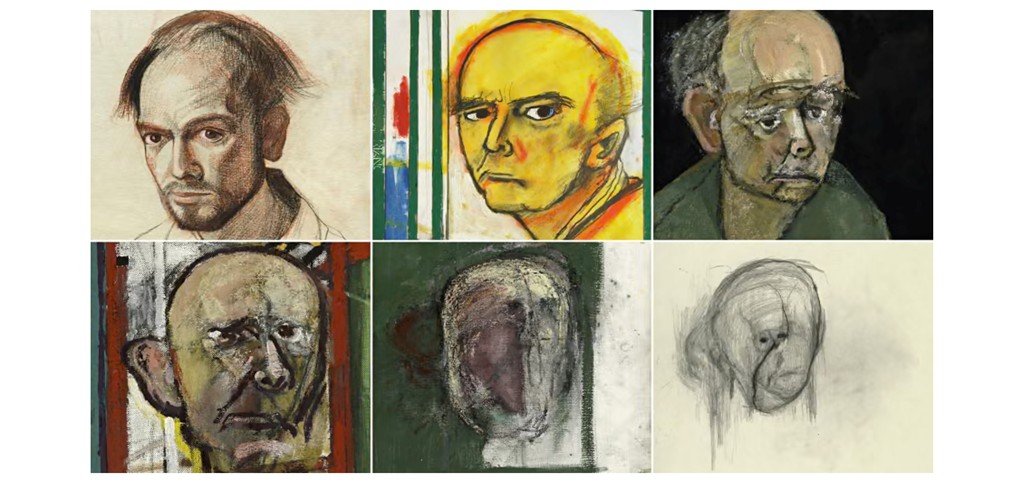
One artist who tried to understand dementia is the London-based American artist William Utermolen, who was diagnosed with Alzheimer’s in 1995 at the age of 61. Seemingly upon that diagnosis, he began a series of self-portraits, perhaps to examine the effects it was having on his mind and simultaneously on his art. This is one of the few singular glimpses of the visual connection between mind and self-presentation that exists to clarify the disease.
I am taken by Utermolen’s portraits as I try to define my mother and her beingness in this moment, in an existential bid for understanding and peace. To make this time matter, maybe, as I find my place in her life and what that might have meant for us both. Hopeful that this isn’t a futile task, I remedy the journey of understanding with a silent, “No one truly knows what any of this means, until the end of a life, when faced with one’s maker/God at the proverbial pearly gates.
“Did I make a difference?” I wonder—to no one in particular.
No answer is given, of course, because I am merely in reverie, and not at the end of my existence. And then, a flicker of white, out of the corner of my eye, slows…perhaps a bit of movement, perhaps a white dog.
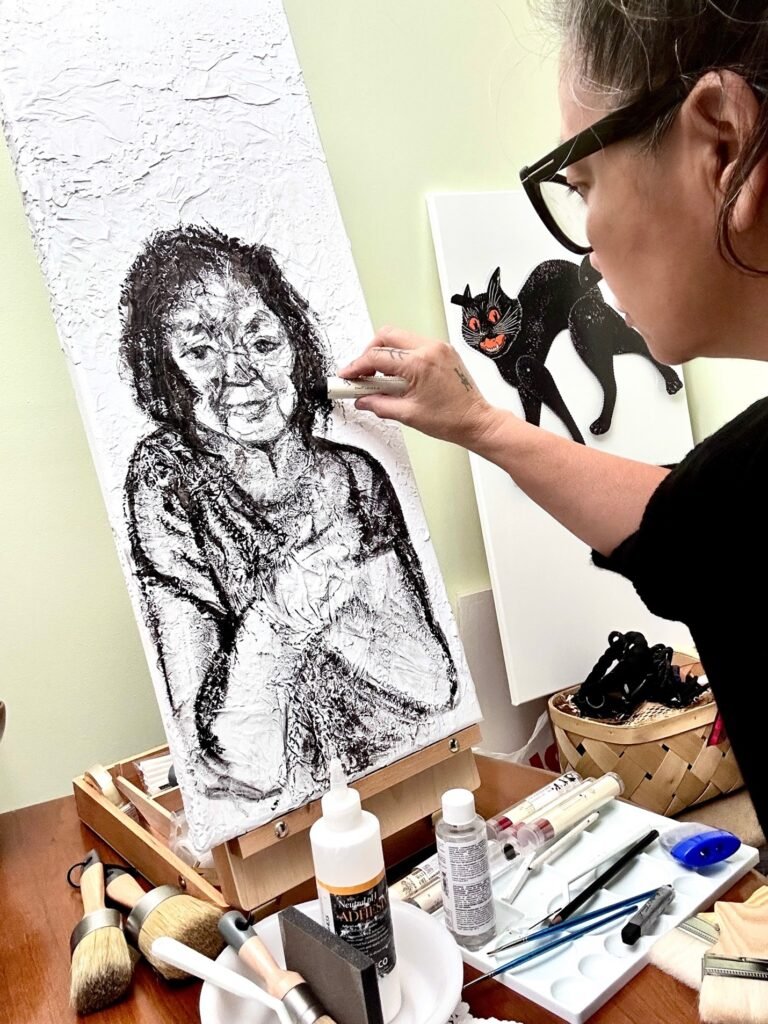
Henderson native Ane Crabtree, a 1982 graduate of Henderson County High School, has been a designer in Hollywood for 35 years. She has created looks for shows like “The Sopranos,” “Westworld,” “The Handmaid’s Tale,” “Darren Aronofsky’s Postcards from Earth” and the recent, “The Changeling,” for Apple TV. She has also created designs for several shows of the futurist Liam Young.


