






















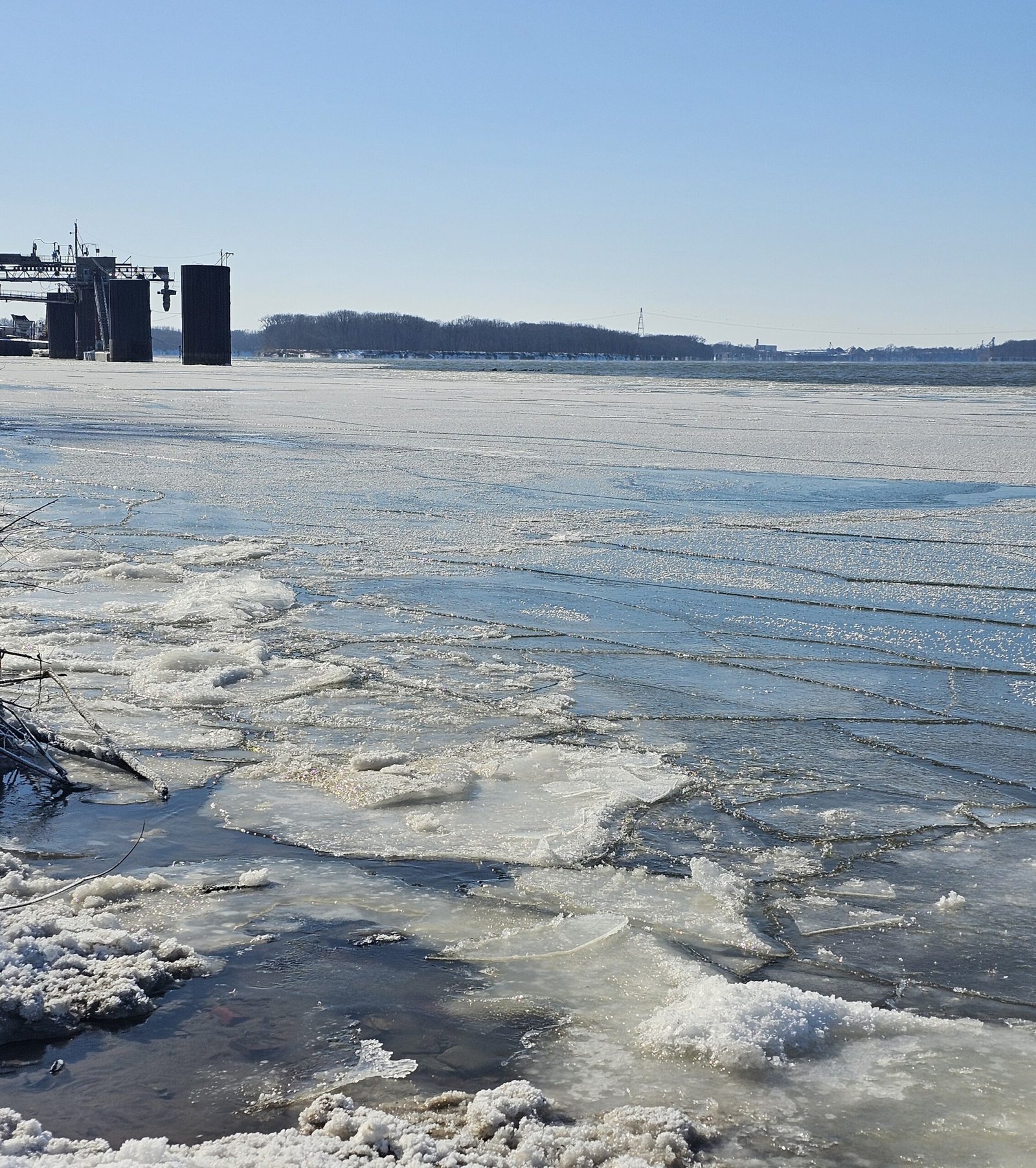
Up next, extreme cold that could cause more ice on the Ohio River
The Henderson area ended up with somewhere between six and eight inches of snow from the weekend’s storm, according to the National Weather Service in Paducah.
It was a hefty amount, but less than Evansville, which ended up with 10 ½ inches and farther north in the Gibson County and Pike County, Ind., areas that got between 12 and 14 inches, said Justin Gibbs, a meteorologist with NWS in Paducah.
Now, the next phase of what Gibbs called an “exceptional”—as in unique—stretch of weather, he said. The next week until Monday, Feb. 2, will be marked with temperatures that never get above the freezing mark, he said.
For this area, he said it will be among the longest stretches staying below freezing on record, Gibbs said.

The meteorologist said that sunny days will help lessen the snow and ice as it will assist in sublimation—when ice is converted directly to gas.
But there will also be some water on roadways during the day that, because of the frigid temperatures, will freeze again at night to leave roadways slick in the mornings, he said.
The high for the next week is predicted to be 27 degrees on Tuesday, before reaching 32 degrees on Feb. 2, he said.
The length of sub-freezing weather will cause NWS meteorologists to start watching something they don’t normally do—the Ohio River and how much it freezes, Gibbs said.
As of Monday, sheets of ice that stretched from the bank to perhaps 30 yards out into the river on the Kentucky side were seen.
Gibbs said the NWS doesn’t foresee a length of freezing that would disrupt river traffic because the number of barges that travel the waterway is significant and can break up ice, while the length of the below-freezing temps probably won’t be long enough for the river to freeze over. Still, it’s something NWS professionals are watching, he said.
Ben Weithman, the executive director of the Henderson County Riverport, said on Monday there’s not enough ice on the river currently to shut operations down.
The cold weather, however, has caused a slow down in work. The extreme cold has caused barge companies to double up crew members so that they can be replaced after shorter shifts to get inside the cabin to warmth, Weithman said.
If the extreme cold continues, he said barge operators could be forced use ice couplings to tie barges together as the vessels move up and down the river.
Weithman received an industry information email from the American Commercial Barge Line on Friday, which said that fleeting services across the Ohio Valley will remain operational.
But “customers should expect significant delays as arctic temperatures and ice buildup disrupt normal operations,” the email said. “Fleets have also confirmed that crews will be working in pairs, with reduced outdoor exposure to ensure employee safety. As a result, extended delays in boat and barge production are anticipated.
He said work on the river will continue, and it’s business as usual, but slower. “Until we see major ice floes jamming up the locks and dams, it won’t be an issue,” he said.


