











(This article first appeared in the February print edition of the Hendersonian.)
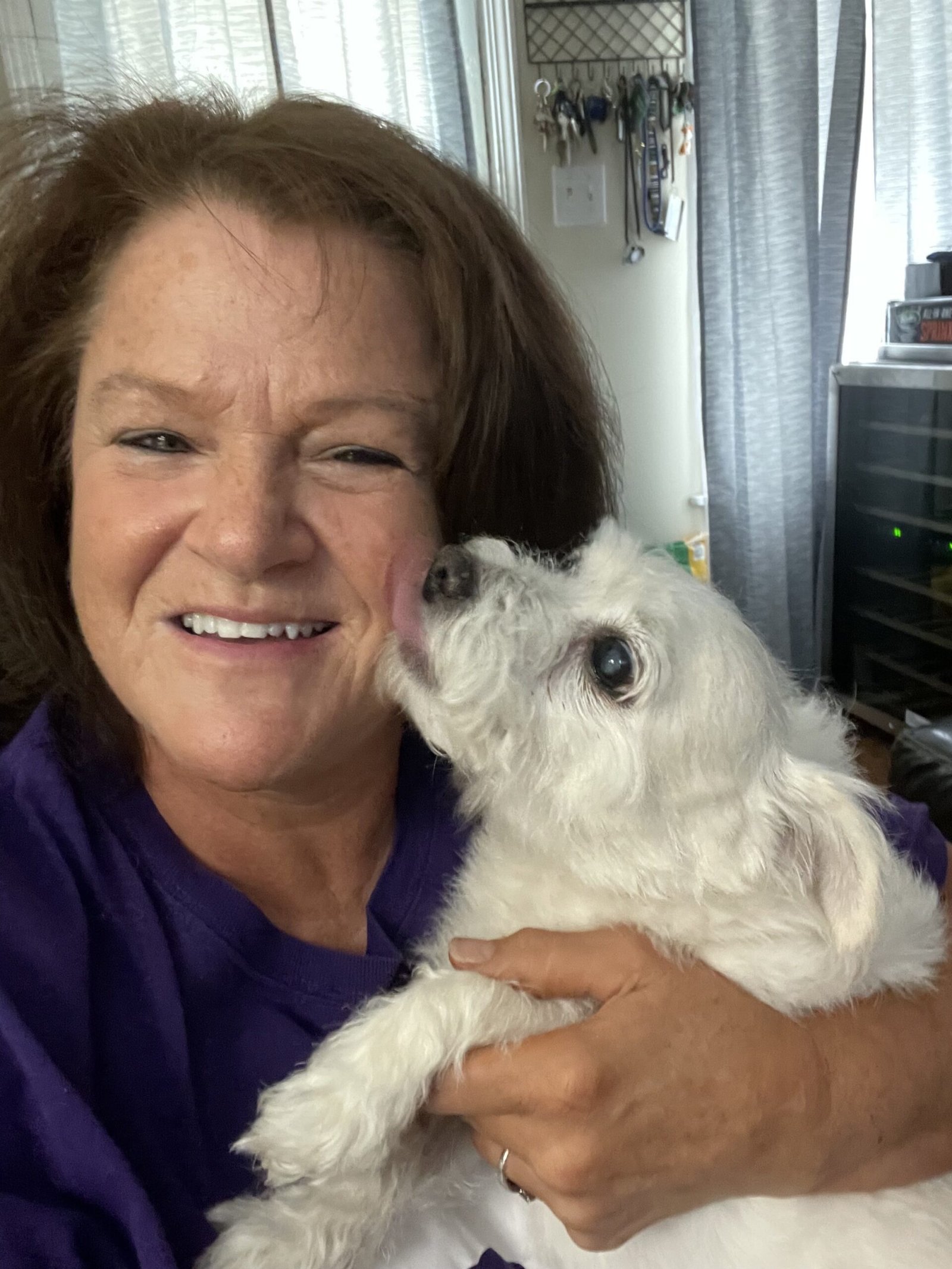
For at least 17 and a half years, Paula Hawkins has been singular in her focus for helping her community.
That focus is all about animals. Finding them good homes, and taking care of them the best way possible.
To those ends, all those years ago she founded New Hope Animal Rescue, a non-profit, no-kill animal shelter located at 526 Atkinson St.

Hawkins couldn’t bear any longer seeing healthy animals cast aside and euthanized just for the lack of a good home.
“That really bothered me,” she said.
Over the years, the organization has grown and expanded.
Each year New Hope handles about 900 cats and dogs, typically more canines than felines, but cats have taken a recent surge.
Recently, she said, both adoptions and donations have taken a downturn and her animal population has stayed high.
“People can’t afford the vet bills,” Hawkins said, and the extra expense of purchasing food for pets is hard for many families to work into their shrinking household budgets.
Keeping the animal rescue open hasn’t always been easy. It’s expensive to maintain a facility, feed the animals and run adoptions (including those in partnership in places like PetSmart in Evansville), though animal-loving volunteers offering their time and expertise have helped ease some of the costs. The shelter doesn’t receive local government funding.
Over the years there have been ups and downs, good times and lean times, mostly because she has had to rely on donations, the generosity of other animal lovers and an occasional grant to keep the doors open, the lights on and the dog chow flowing.
“We were about to close our doors” on more than occasion, Hawkins said, then just in time they would receive a windfall that would keep them going. That included an award from an estate that kept them stable for a quite a while and another generous benefactor who paid off their building, invested in a new roof and bought them a van.
“It’s been a rocky road,” she said, noting that typically the no-kill shelters don’t get top priority in grant programs for animals. “They know we’re not going to euthanize.”
But now there’s something new that could help stabilize New Hope.
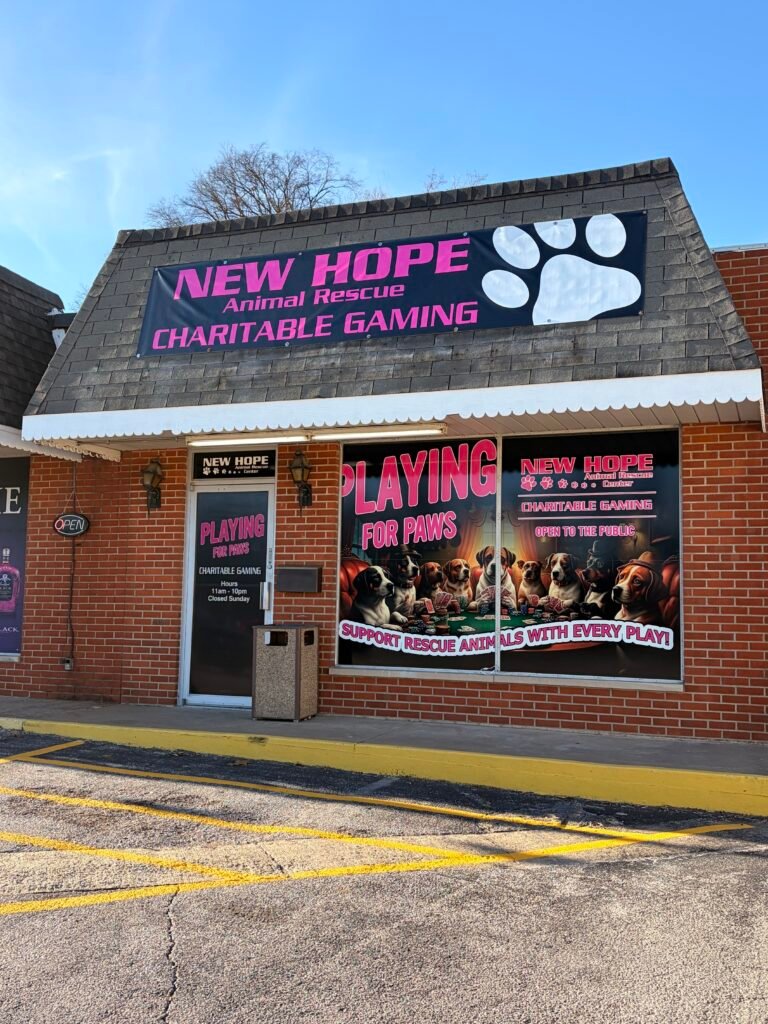
At the end of December, after going through the process of applying for a charitable gaming license, they opened Playing for Paws, a gaming parlor at 425 S. Green St. with the sole purpose of providing revenue for taking care of the animals. It is manned by New Hope volunteers. Each casino-style machine in Playing for Paws offers 26 different types of games.
Hawkins said she and her board thought about the concept for many months after the idea was pitched to her by someone who’d adopted animals from New Hope and who works in the gaming business. They hashed, and rehashed, all the pros and cons of it.
What it came down to, she said, was that “people are going to gamble anyway so they may as well donate it to animals. So far, nobody has been negative.”
New Hope was able to acquire a charitable gaming license through the state of Kentucky by virtue of being a 501(C)(3) nonprofit.
She said it’s too soon to tell whether it could be a long-term solution to the shelter’s funding issues, but it’s off to a good start and customers have found and supported them despite limited marketing.
“It could be a very big game-changer,” she said. “We might not have to turn down medical emergencies anymore.”
Hawkins said she has hopes that a new revenue stream will also help the organization reach other goals, such as expanding the number of animals the shelter can accommodate, providing more education on the importance of spay and neutering as well as offering low-cost opportunities and possibly even sharing their earnings with other nonprofits.
Meanwhile, for those who don’t care for gaming machines but who would still like to help the shelter, New Hope can always use donations of cleaning supplies, Dawn dish soap, old blankets and towels, cat litter and pet food.
“The community has been wonderful about bringing us things,” Hawkins said. “The community gets all the credit. We couldn’t have done this for this many years without our community. The easy part it taking care of the animals and loving them.”