




















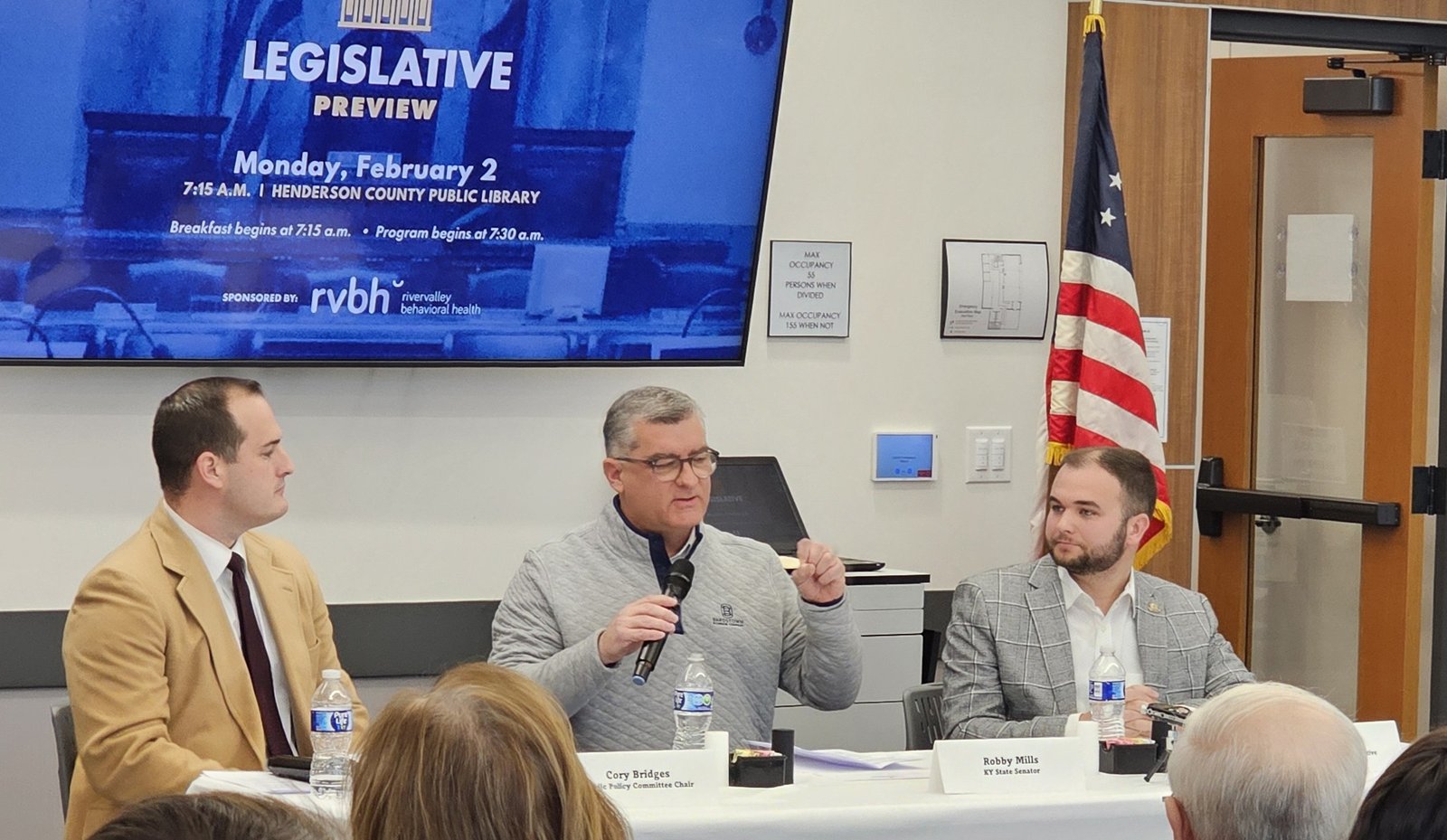
State Sen. Robby Mills says he’s excited about the possibility of local governments across the state putting in place tools that are provisions in Senate Bill 9, which recently passed the Senate and moves to the House for consideration.
Mills sponsored the bill and has also been a co-chair of the Kentucky Housing Task Force the past two years. He said the bill has come from the task force’s work and in response to data that shows the state needs 206,000 housing units.
“It’s exciting with the possibility of this being put in across the state,” Mills told the Hendersonian Saturday afternoon.

He said it’s also an important piece of initiatives aimed at growing Kentucky’s economy and at attracting more businesses and people to move to the state.
“If you don’t have a place for the employees to call home and a place to hang their hat, it’s going to be hard for our state to grow,” Mills said.
The bill gives local governments two new tools which Mills said will help homes be built more quickly and incentivize contractors to build. He said local governments can decide if they want to establish Residential Infrastructure Development Districts and Housing Development Districts.
Local governments can create Residential Infrastructure Development Districts, which would allow them to bond infrastructure costs up front so that water, sewer and road infrastructure can be put in place more quickly while also not being a financial burden to the contractor, Mills said.
Then, Mills said, the bonds are paid back through individual fees that are placed on each residence that is a part of the specific project. For the bonding to be used, a project must be at least five acres and cost at least $5 million, he said.
With Housing Development Districts, local governments and contractors can negotiate incentive payments to builders using new property tax revenues that come from the projects, Mills said. According to a release from his office last week, incentives can be awarded for up to seven years on new construction projects or up to 15 years on redevelopment of existing structures.
For example, if the property tax on a new home is $6,000 per year, and the negotiation was 50% of the property tax, then the contractor could get $3,000 per year annually on that home for up to seven years, Mills said.
Local governments could also in their negotiations require certain sizes and prices of the homes while also requiring a set number of homes to be built, Mills said.
If Housing Development Districts were to be implemented in a community, it would require a city or county government to also negotiate with the local school district because more than half of a property tax bill can be dedicated to local schools, Mills said.
According to the release from Mills’ office, SB 9 reflects recommendations from the Kentucky Housing Task Force, which examined workforce housing shortages, affordability challenges and regulatory barriers across both urban and rural communities. The bill is designed to support responsible growth while protecting taxpayers and maintaining local control, said the release.
Mills said he believes the bill could help mid-size communities that are trying to grow, such as Henderson, Madisonville, Paducah and Hopkinsville. He also said judge-executives in both Webster and Union counties have expressed interest in using these tools for smaller subdivisions in Sebree and Morganfield.

