



















(This history column first appeared in the April print edition of the Hendersonian.)
The Henderson City Council fired the entire police force a month before it opened its first city hall in 1873.
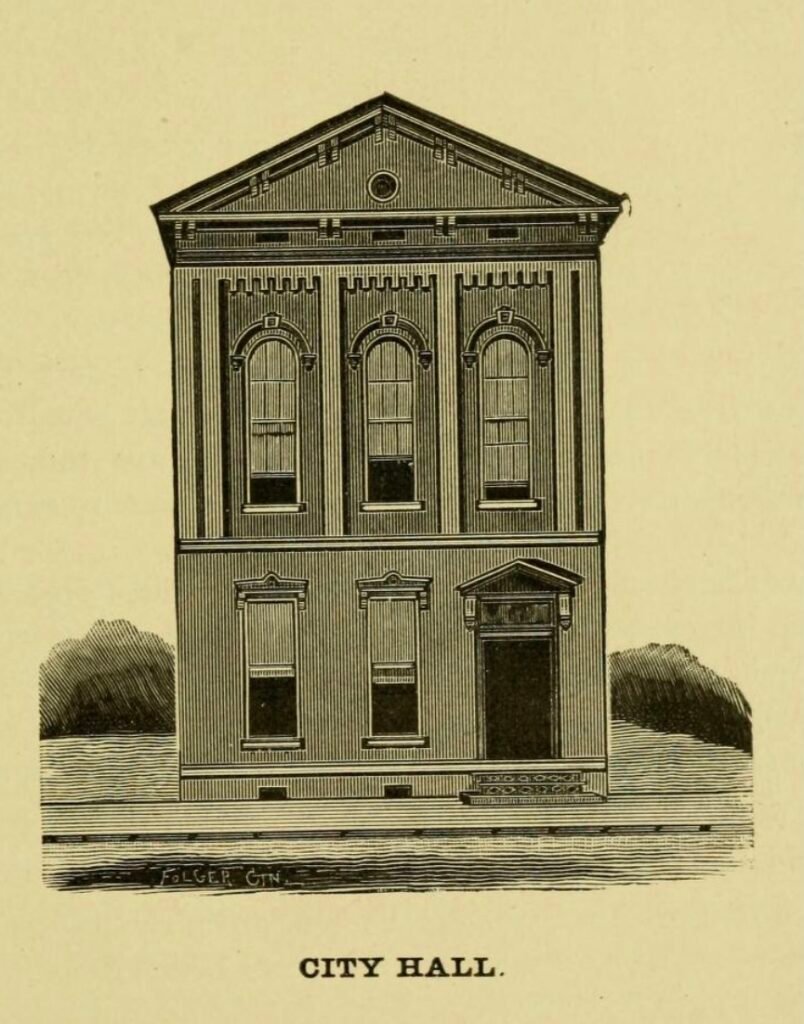
E.L Starling, in his 1887 history of the county, doesn’t address those turbulent times for the police although he describes the process of building the “station house.” It was called that initially because one of its main functions was to house the police department.
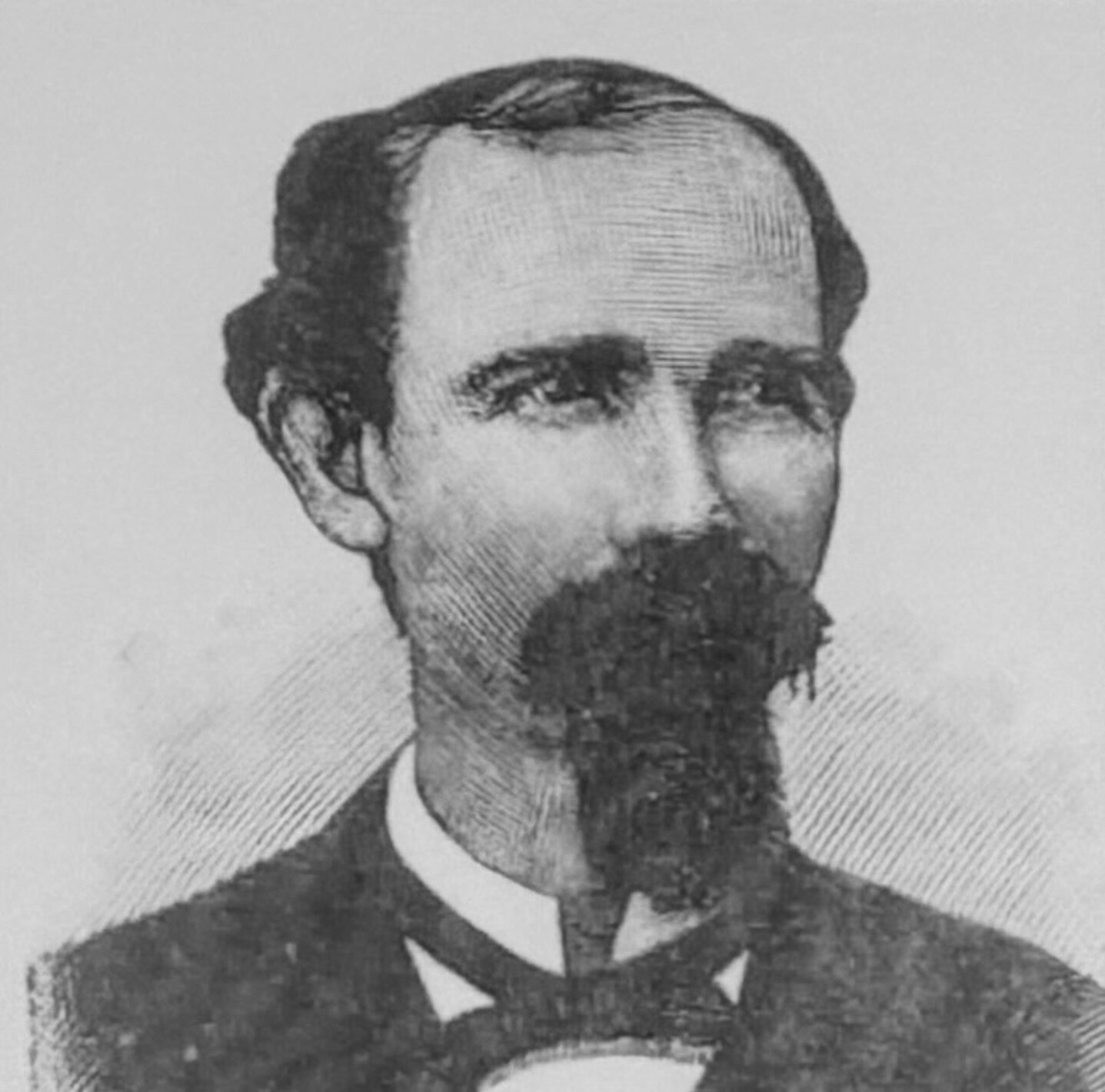
Starling was elected to a six-year term as mayor in 1868, so he presided over the planning, which began in 1871, and the construction of the station house, which was occupied July 15, 1873.
But let’s delve into the turmoil at the police department before describing how the building came to be. Problems had been developing for years. Police Chief John Perry had been forced to resign Aug. 15, 1871, because of conduct unbecoming a police officer. Officer James B. Evans was fired the same day for the same reason – although he would later rejoin the force.
My habit of using old newspaper articles to write about local history has a drawback in that large periods of local history are not easily documented. That’s the case of the 1870s—although I can sometimes lean on the Evansville newspapers. For this topic, however, I found only a handful of useful stories in the Evansville papers.
So, for the most part, I’ve had to rely on the hand-written minutes of the Henderson City Council. At the end of 1871 the council passed ordinances setting policemen’s terms of office at one year, to be renewed every May, and drafted a set of rules for them to follow.
Some of those rules seem a bit odd today. For instance, it was a felony to conceal the birth of an illegitimate child. It was also illegal to fly kites in city streets.
Officers occasionally were suspended for conduct unbecoming, but apparently that was not a huge deal. The city council suspended William Whitehead on Oct. 3, 1871—and named him police chief two months later.
But things got more serious in mid-1873. On May 5 the council named Whitehead, P.B. Boyce, James T. Williams and James B. Evans to the force. But it didn’t approve the reappointment of Louis G. Wyatt until May 21.
Perhaps rumors were already circulating. The council meetings of June 3 and June 17 saw momentous actions. One of the most startling was a letter from Mayor Starling to the council bringing charges of misconduct against Wyatt:
“It is deemed unnecessary to present with this any written specifications, as said charges have become so public it is presumed that each member of your Hon. (Honorable) Body have heard of them before. These charges are now before the public and a speedy investigation demanded. It may not be out of place to urge prompt and speedy action upon your part.
“These charges are of a disgraceful nature and should command your earliest attention.” (I almost get the impression Starling was reluctant to put them in black and white.)
Whitehead was brought up on charges of conduct unbecoming at the same meeting—for leaving the city limits without authorization while on duty—but Mayor Starling’s outraged communication to the council was aimed solely at Wyatt.
I’ve been unsuccessful in learning the exact accusation against Wyatt. He was in his mid-30s at the time and, according to the 1870 census, was married with two small children.
Also, at the June 3 meeting the council approved salaries of $2.50 per day for policemen and reappointed Evans, Boyce, Williams and Whitehead to the police force.
But at the very next meeting, on June 17, the council unanimously fired Wyatt and accepted the resignation of Whitehead. It then fired Evans, Boyce and Williams—the remainder of the police force—which the mayor had recommended at the June 3 meeting.
But no sooner had it fired Evans, Boyce and Williams than it immediately rehired them, along with James W. Priest and John S. Rodman. However, at the recommendation of the mayor, it required all officers to post bonds to guarantee diligent performance of their duties.
And they were open-ended bonds; there was no set amount. The policemen’s sureties had to guarantee payment in full to the city or “any person injured by such failure or wrongful act.”
The policemen began posting bonds in July 1873—and that’s when Henderson’s first city hall opened.
The Evansville Daily Journal of June 7 reported the building was almost ready—although that story was a month premature. “The station house building will be entirely finished next week and will be ready for occupancy. The city officers will all have offices in the building, and the City Council and City Court will have a beautiful chamber set apart for their sessions.”
According to Starling’s history, the council, “having submitted for years to second-story rooms and unsuitable and uncomfortable places wherein to hold their meetings,” adopted a resolution Feb. 22, 1871, to build a station house. On Oct. 24 of that year George W. Fallon provided plans for construction and the council adopted them.
On April 16, 1872, according to the minutes, the council appointed a subcommittee to oversee construction, consisting of J.C. Stapp, W.S. Johnson and P.H. King. At the same meeting it hired John M. Shaw as superintendent of the construction project.
According to Shaw’s contract, he was to be paid $3.50 per day, make the project his sole priority and hire all employees, although that was subject to the committee’s approval.
However, on May 7 the city council contracted separately with Henry Kleymeyer to provide the brick; and with brickmasons Richard Digman and Peter C. Kyle to construct the building.
The Digman & Kyle contract said the two-story building was to be 30 feet wide and 80 feet long. Starling’s history says the city bought iron doors, frames, gratings, etc. that had been in the county jail that had just been razed, along with more than 100,000 bricks from the old jail. Included were flagstones from the jail, which were some of the final masonry work at the station house.
The project appeared to run over budget. On May 20, 1873, the council split almost evenly over whether to move $1,000 from the Miscellaneous Fund to the Station House Fund.
Starling’s history wound up its report on construction of the station house by saying, “This building was completed at a cost of near $17,000 and was occupied by the Council for the first time on July 15th, 1873. It is a magnificent building and stands today as evidence of the taste and good judgment of the Council who conceived the idea of its building.”
One of the first things the city council did upon meeting in its new home was to pass an ordinance saying, “hereafter all meetings of the Common Council will be held in the new City Hall….”
The city police judge got to use the new chambers only a month; on Aug. 19, 1873, the council relegated him to his former quarters, which was a one-room building in the center of Central Park. It was on the south side of Center Street, which at that time extended through the park all the way to Main Street.
The Evansville Courier of Nov. 18, 1944, described the interior of the original city hall. A second city hall was built four decades earlier and the city courtroom and the old council chambers on the top floor were sealed up for years; City Judge James B. Norment had recently reopened them.
“The courtroom was the city council chambers many years before the (second) city building was erected in 1903. Massive railings surrounding a dais for the mayor’s desk give an idea of the architecture and furnishings of that period.
“A bench follows the circular railing where the city councilmen from the seven wards sat. Old fashioned benches outside the railing were used by the public.”
The police department wasn’t always in what originally was called the station house; the March 1892 Sanborn fire insurance map depicts police headquarters in a brick building at the southwest corner of First and Elm streets, but apparently the police didn’t stay there long. By March 1897 that building was occupied by the city courtroom.
For most of a century, however, police headquarters remained in the original city hall until new headquarters opened at First and Water streets at the end of 1963. That building underwent a major renovation in 1983 but was closed in 2000 when the city acquired half of the former Peabody Coal headquarters and converted it into the Public Safety Building.
The riverfront police station was razed in May 2002; The Depot now stands on the site.
I had to do some digging to find out what happened to Henderson’s original city hall. Once a new police station opened in late 1963 the Henderson City Commission moved quickly to get the old one out of the way to provide more parking for city vehicles.
The Gleaner of Feb. 15, 1964, reported Ray’s Septic Tank Co. had been awarded the demolition contract at $2,751. Arthur B. Ray had to begin within 10 days and complete work within 60 days.
The Gleaner of May 6, 1964, reported the city commission had approved payment, although it withheld $200 “until work on a chimney is completed.” I’m thinking that was to remove the base of an old chimney.
The original city hall stood roughly on the site of the current Henderson Municipal Center, which was dedicated April 26, 1975.


