

















Henderson residents heard several proposals to improve the inner city Thursday night at the Municipal Services Center. Now, city of Henderson officials are asking residents to vote on the proposals they like best.
It was a part of the annual Inner City Improvement Plan presentation night. Committees that have worked on crafting projects throughout the year show them off to an audience that then votes on what they think are the best.
Now in its third year, the ICIP was first approved by the Henderson City Commission in 2022 for a start date in 2023.
On the night of the presentation the first two years, residents who attended the event voted with stickers on displays that listed project names. This year the city has a QR code and residents can vote electronically through Dec. 31, said City Clerk Jessa Brandon. (Look for that QR code at the end of this article.)
Each year, the city budgets $300,000 to fund the projects that come from the ICIP. Mayor Brad Staton, however, called the budgeted funding a placeholder and said the city has spent more than that on the projects the first two years.
Five committees worked on five proposals. Here they are:
- The Public Safety Committee proposed an opportunity for residents to install solar lighting at their residences. Chair Kristie Randolph said some residents told her they don’t feel safe at night around their homes and needed extra lighting. The project is expected to cost $5,000 for the lights—100 total at $50 each—along with $2,500 to cover costs associated with installation, Randolph said.
A second project presented by the Public Safety Committee involves food insecurity and would entail providing cooking classes.
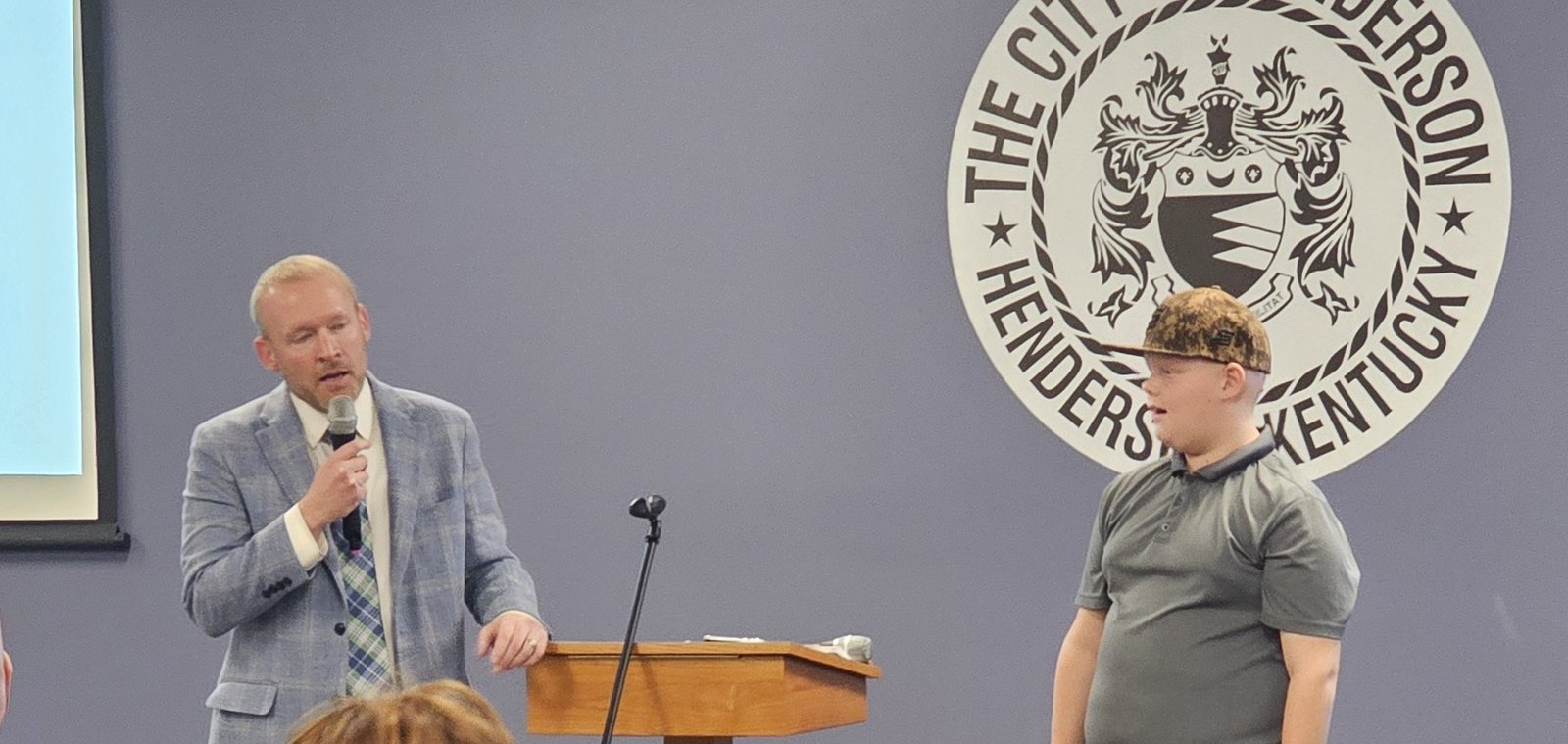
A third project mentioned is installing blue light safety poles that when activated will light up and send an alarm to 911 Dispatch. Each pole would cost about $20,000, Randolph said. This idea came from Bryson Gish, now a student at South Middle School, who during the city’s student mock city government last year suggested the safety poles for playground areas, said Staton. Gish said that some kids who can go to a playground alone don’t have a phone to call and this would be a way to call for help if in danger, Staton said.
- The Blight & Affordable Housing Committee proposed a series of five trainings that could take place over the course of two days that would help to educate members of the community who want to move into an apartment or who want to transition from being a renter into a first-time homeowner, said Dr. Michelle Chappell, the chair of the committee. The trainings, conducted by experts in the community, include Module 1: Building Financial Foundations; Module 2: Renters’ Rights and Responsibilities; Module 3: Transitioning to Home Ownership; Module 4: Maintaining and Sustaining a Home; and Module 5: Long-term Stability and Engagement.
Those who successfully completed all five modules would have $1,000 go directly to their landlord to help with expenses or to a financial institution with whom the resident has a mortgage to help with that expense, Chappell said. The goal is to get 10 residents to go through the trainings.
- The Economic Development Committee has developed a project that, according to Staton, has been fast-tracked and will be presented to the city commission soon. That project is a $50,000 incentive package for existing businesses in the inner city. The impetus for creating this plan, according to chair Adam Blythe, was a refocused desire to help longtime businesses while also asking, “How can we make the inner city a destination?”
Of the $50,000 that could go to a business, $30,000 is for improvements to businesses and $20,000 is earmarked for façade improvements to businesses, Blythe said.
A second part of the committee’s proposal is geared to improving business districts in the inner city. In it, $10,000 would be awarded to improve the aesthetics of an area around existing businesses.
- The Neighborhood Empowerment Committee proposed a project with two parts. First, the committee proposed a Community Fun Day with games, food and activities at a location in the East End. The day would also feature a guest speaker, and the Rev. Charles Johnson mentioned possibilities Courtney Johnson, who heads up Young and Established in Evansville; a University of Kentucky basketball player; or even Olympic superstar Jackie Joyner-Kersee.
The second project from the committee are Neighborhood Action Projects. These are smaller, community driven projects that residents in the neighborhood pitch and then receive grant money up to $1,000 to carry out, said Bobby Jo Marx, the chair of the committee.
“We believe the people who live in the East End know what’s best for the East End,” Marx said, adding that neighborhood action projects create a new mindset that “We can do this here.”
Marx, the director of community engagement at Audubon Kids Zone, also said that she knows these projects work because AKZ has assisted in making many happen.
“We know they work because we’ve done it,” Marx said.
- The final committee of the evening, the Youth Engagement and Enrichment Committee, presented a plan that that revolves around youth mentorship. Some statistics offered by chair Jaseon Beasely were that youth who have mentors are 92% more likely to volunteer as an adult and 88% of youth with formal mentor pursue higher education.
With that in mind, the committee wants to start a program in which getting time off from work so an employee can mentor local youth is made easier. Instead of having to go through several steps to get approval for the time off, the program would install a blanket approval if an employee wants time off to mentor.
Henderson Police Department Lt. Daniel Lehman, also a part of the committee, said when businesses see this model, they will want to adopt it.
And on a side note, Lehman said there are several children who regularly go to Audubon Kids Zone that are waiting for “bigs” to mentor them. He urged people to mentor.