
















Traffic buildup will be with us for at least another week as state engineers implement a temporary fix to rocker bearings under the left lane of the southbound Twin Bridge.
Those traveling the roadway the past week have battled some congestion—the first day the lane stayed closed, on Monday, Aug. 17, some commuters said they spent three hours trying to get home. Several reports show that on Friday, Aug. 21, commuters encountered congestion and were again stuck in traffic for hours.
Maybe we as drivers can alleviate, at least a little bit, some of the congestion that occurs at this merge point and those that will occur in the future because we know as Hendersonians who’ve traveled the bridges for all or some of their lives, that sure as sugar we will see more congestion on the bridges—this upcoming week or two weeks from now or three months from now. The question is not if, but when.
I got a call this week, and then hours later a text message, wondering why we don’t incorporate the zipper merge around here. In fact, the caller said that in other parts of the country, drivers—when a lane is closed ahead—use both lanes all the way up to the merge point. Meanwhile, drivers here tend to move into the lane that will be open ahead as far back as a mile or two.

Then those drivers who have moved into the lane that will be open ahead guffaw at, or curse, those other drivers who are “cheating” by going ahead in the lane that is currently open but is closed ahead.
Come to find out, those of us who have moved into the lane that will remain open ahead too early can be one of the reasons for the gridlock we experience.
The Indiana Department of Transportation encourages drivers to use the zipper merge when a lane is closed ahead because of construction or maintenance work. A Kentucky Transportation Cabinet official also told me that the lane closure at the Twin Bridges is ideal for drivers to employ the zipper merge.
So how does it work? It’s simple, really, but requires a bit of patience and courtesy.
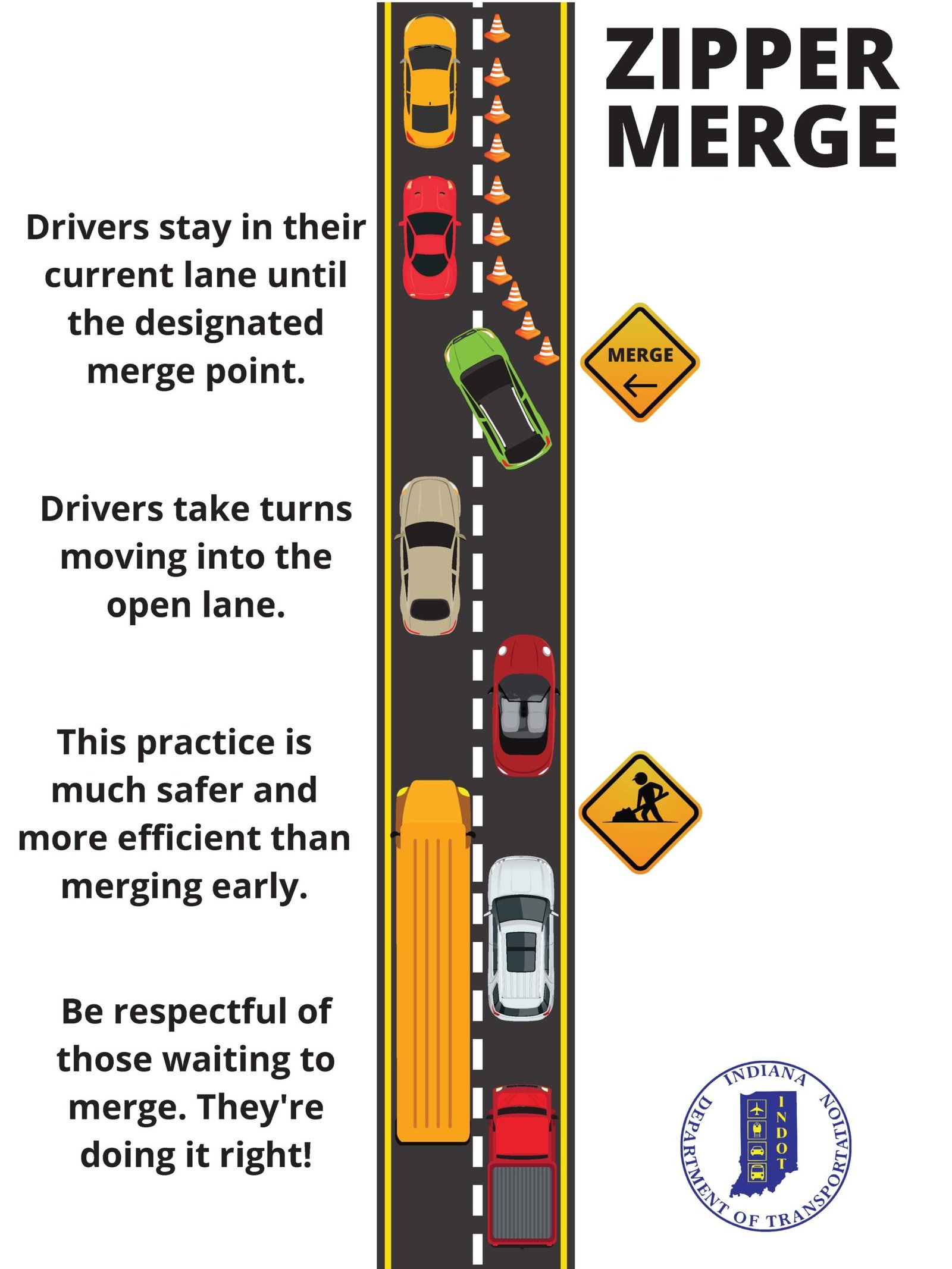
This, according to an INDOT page about zipper merge: “As drivers see ‘lane closed ahead’ signs, they should stay in their current lane up to the designated merge point. Then drivers should take turns moving into the open lane. This practice is much safer than merging early, which causes congestion and more significant changes in speed.
When a zipper merge is in place, be respectful of other drivers who wait to merge until just before the lane ends – they’re doing it right!”
Another point from INDOT about not using the zipper merge: “Most drivers tend to merge at the first sight of a “lane closed ahead” sign, however many slow too quickly, which can lead to unexpected lane switches, serious crashes and road rage.”
One of the benefits that INDOT lists is that the zipper merge can reduce queue length by up to 40%. That kind of reduction would definitely benefit the lines of cars we’ve seen that stretched back to all the roads that feed into U.S. 41 South.
I’m not saying the zipper merge will cut a wait of two hours to 20 minutes. But from what I’ve been told, it will keep the flow of traffic moving smoothly and efficiently, allowing for a feeling that you the driver are making progress in getting home and eliminating those spans you sit without moving for minutes and the frustration begins to bubble over.
See more from INDOT here.


