


















Henderson’s Elevate is featured in a recently released Christian Science Monitor half-hour documentary exploring the issue of employment and pay for those with disabilities at sheltered workshops.
The description of the documentary, which is titled “Sheltered workshops: the controversy over the disability subminimum wages,” was released on Friday and can be viewed here says this:
“…more than 30,000 disabled people work in specialized factories where they earn less than the federal minimum wage. These spaces, known as ‘sheltered workshops,’ have drawn widespread criticism from activists and some former workers, who say they are a form of economic exploitation and segregation. However, many current workers, as well as their caregivers, support sheltered workshops and the sense of purpose and community they can bring.”
Elevate Executive Director Julie Wischer said the local organization used to be a sheltered workshop and was allowed to pay less than minimum wage to workers and the pay was based on their production.

But that changed on Jan. 1, 2020, when Elevate began paying its participants—“participants” is what Elevate calls people who attend there regularly—minimum wage, Wischer said. Now, Elevate officials and teachers spend much more of each day holding classes, many of which are geared toward trying to get participants work ready for jobs in the community, Wischer said.
Wischer said Elevate has placed about 20 of its participants in jobs in the community since 2020, and she said that’s come from paying participants minimum wage, working with them to be work ready, and talking about wages.
“They know they’re worth a regular job,” Wischer said.
She said currently about 10 participants have jobs in the community at places such as Abba Promotions, Brown Bag Burgers, Mr. B’s and Fazoli’s.
Elevate still does offer work on campus, but Wischer said it doesn’t come on a daily schedule and most often from local companies who send a project over for participants to complete.
And not all the 56 participants at Elevate choose to take part. Wischer said about 22 of the 56 participants choose to work when it is available. The rest are there for the classes and the social aspect, she said.
Initially it was Elevate’s switch to paying minimum wage that led to CSM reporter Jingnan Peng’s visit. Peng called state officials looking for an agency that had moved away from paying subminimum wage to employees with disabilities, Wischer said.
Peng came to Elevate in 2024, but after visiting the local organization, he got more interested in the full picture and made visits to sheltered workshops in Pennsylvania, before completing the documentary, Wischer said.
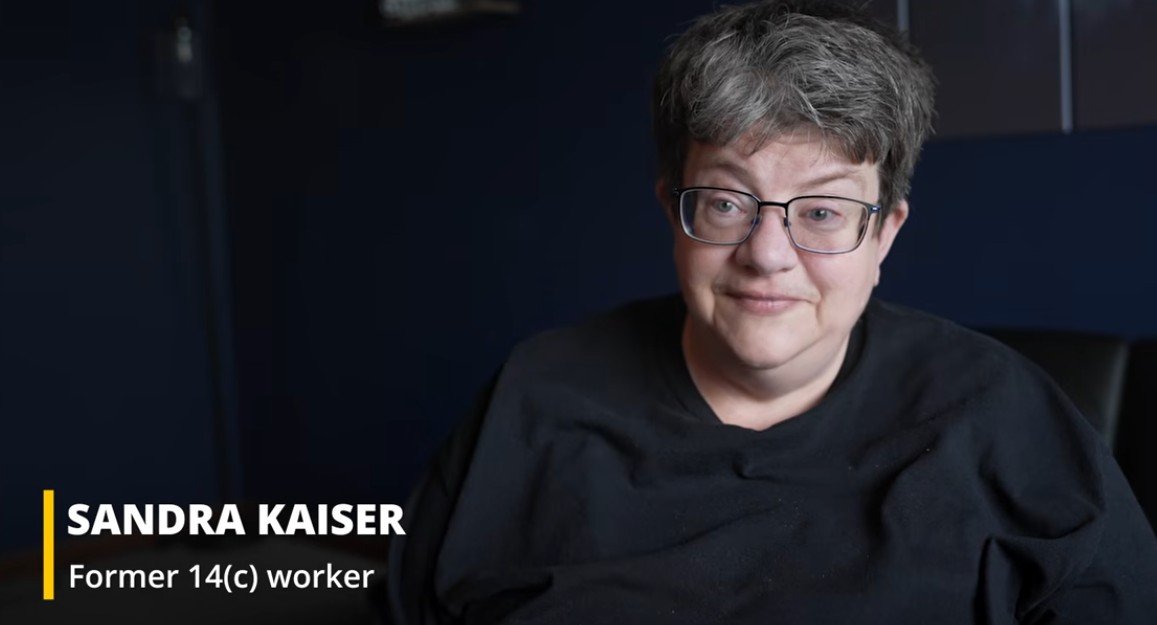
A brief shot of Elevate and participants occurs early in the documentary, and from the 22:12 mark on, the film focuses on the organization. Sandra Kaiser, a local Elevate participant, is interviewed. Peng followed Kaiser, who at the time had a job at Arby’s, for three days, Wischer said.
Wischer said Elevate was the first sheltered workshop in Kentucky to offer minimum wage, though fairness wasn’t the only reason to do it. She said the paperwork and application process were also reasons to try a different approach.
“We didn’t do it to be the first but I’m really proud we did it,” Wischer said.


