


















See Stellar’s complaint in full at the end of the article
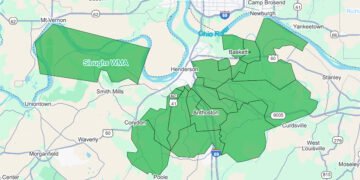
Stellar Renewable Power, the developer of a proposed solar farm that bisects Ky. 425, has filed suit against Henderson County government and others connected to the project, claiming they are unfairly withholding a building permit.
The plaintiffs, which include the company Henderson County Solar (also the name of the project), are asking the court to allow the work to begin and payment of $16,000 “per day for each day of delay caused by Defendants’ failure to issue the building permit in a timely manner,” said the lawsuit.
The plaintiffs’ complaint, filed Monday in U.S. District Court for the Western District of Kentucky in Owensboro, casts a wide net of those deemed defendants, including Henderson County (which more precisely is county government); Henderson County Fiscal Court; the Henderson City-County Planning Commission; the Henderson County Codes Department; the Henderson County Board of (Zoning) Adjustment; as well as individuals Judge-Executive Brad Schneider; County Attorney Steve Gold; County Codes Administrator Randy Tasa; and County Engineer Nick Stallings.
The basic argument made throughout the 35 pages of the lawsuit’s main body is that the project’s application and site plans were submitted and approved before a Henderson County Fiscal Court moratorium on solar energy systems went into effect in February 2025, so using the moratorium as a basis for not granting a building permit is erroneous.

The suit states that from January of this year through May, Tasa provided guidance to those involved in the project “concerning the documents needed for approval of the Project building permit. Tasa did not advise Plaintiffs that the Project was barred by the moratorium during this permit preparation process,” said the suit.
On May 29 of this year, the project’s contractor, WHC out of Texas, submitted an online application for a building permit. The issuance of the building permit has not yet happened.
With the May 29 building permit application, county ordinance states that Tasa must issue a building permit in two weeks or inform the fiscal court in writing why he hasn’t.
As of this writing, it is unclear exactly why the building permit was not issued. The Hendersonian asked Gold on Tuesday, and he gave no indication why it was not issued or when one would be. With further questioning, it was learned that Tasa had submitted a letter to the Fiscal Court.
In the June 12 letter, Tasa indicated he could not act because the building permit was being reviewed by Gold and outside counsel.
Tasa wrote, “Ostensibly, this installation appears to be subject to the moratorium on Level 2 Solar Energy Systems pursuant to §30.04 of the Zoning Ordinance. The developer has communicated to me, the Henderson County Attorney, and our outside counsel on this matter, that the developer believes the moratorium to be inapplicable for various reasons. The matter is currently being reviewed in depth by the County Attorney and outside counsel, but I have been advised that it will require significant legal research and that a final determination will not be possible within the two week period…”
The county’s outside counsel is Mac Johns, an attorney with firm English, Lucas, Priest and Owsley who the fiscal court hired earlier this year to help with renewable energy litigation that it might face.
The plaintiffs point to a string of occurrences for why they don’t believe they are subject to the moratorium. In early 2025, the fiscal court gave final approval for the county’s two-year solar moratorium. In the suit, the plaintiffs said officials with the county had said that the moratorium “should not apply retroactively to already approved, grandfathered projects.”
In a Hendersonian article at the time, Brad Bickett, general manager of Henderson Municipal Power & Light, said that the Henderson County Solar project would not be affected. (All the energy created by the project is planned to go directly to HMP&L’s customers.)
In July 2025, the Henderson City-County Planning Commission approved the project’s site plan. It was the project’s third site plan approval.
In a Hendersonian article then, planning commission Executive Director Brian Bishop said Henderson County Solar’s site plan was first approved in 2021, then was followed by an approval of an extension on the site plan in 2024, and then the July 2025 site plan extension approval was considered as being grandfathered in.
The plaintiffs said in the complaint that it was believed the project was grandfathered in based on Bishop’s and the planning commission’s approval in July 2025 and “the County’s approvals, renewals and repeated representations” that the project was grandfathered under the 2019 ordinance that the fiscal court passed regarding solar energy systems.
Another piece of the lawsuit is that the site plan approval extension that the planning commission approved in July 2025 was for one year. It is set to expire on July 1. The plaintiffs requested that the court extend the site plan approval while the case goes through the court system.
A piece of interest which could hold some bearing is the amount of money that Stellar said has been spent thus far on the project. According to the suit, “Plaintiffs and their affiliates have spent approximately $29.7 million on development, equipment, procurement, engineering, permitting, interconnection, contracting, and other project costs.”
Generally, the individuals are named in the complaint because plaintiffs claim they have not done their jobs regarding the project, which has contributed to the plaintiffs not receiving a building permit.
Finally, the complaint said that the plaintiffs seek “immediate declaratory and injunctive relief, a writ of mandamus or mandatory injunction compelling issuance of the building permit, a declaration that the Project is exempt from the later ordinance and moratorium, an order preserving and extending the Project’s site-plan approval during the pendency of this action, damages of at least $16,000 per day for each day of delay, damages for all other losses caused by Defendants’ failure to issue the permit in a timely manner, attorneys’ fees, costs, interest, and all further relief to which Plaintiffs are entitled.”
A complaint states one side of a case. The defendants have 21 days to file a response.


