




















Henderson Municipal Power & Light is considering adding natural gas generation to its energy portfolio, but it’s yet to be decided what that will look like.
HMP&L General Manager Brad Bickett said he presented the consulting firm 1898 & Co.’s report to the utility’s board on April 27 and recommended to board members that “some type of natural gas fuel generation” is needed.
Last fall, HMP&L hired 1898 & Co. to create an integrated resource plan to help determine the utility’s energy needs for the next 20 years. At the time, Bickett said 1898 & Co. was asked to pay special attention to the possibility that the utility could build and operate a natural gas generating plant here in the future.
Bickett said currently he’s leaning to a partnership with another utility to build a natural gas power plant in another location and then transmit the energy to Henderson. He said that would allow HMP&L to have some piece of the ownership and would include a power purchase agreement to guarantee a percentage of the energy from the natural gas at the plant is delivered to Henderson.

Even though Bickett is leaning toward a partnership for a power plant elsewhere, building a natural gas plant here is still an option. There would, however, be some obstacles to that happening.
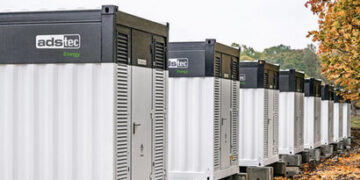
For one, one type of plant that could be built here, a reciprocating internal combustion engine, would come with a risk because this region may not have enough natural gas when the weather is cold. Because of that, a natural gas power plant would at those times have to burn diesel to supplement the need, which is an added cost, Bickett said.
Another factor is that building a RICE natural gas plant, which Bickett described almost like a diesel engine on a much larger scale, would have to have broad community support.
With the current debate surrounding all types of energy in the county, Bickett said he’s unsure the community would support a 40-megawatt plant costing in the range of $100 million. He said “there has to be some level of confidence” that a plan to build locally would come to fruition because some sort of stoppage to a plan, such as not obtaining site plan approval, could leave HMP&L scrambling to find other suppliers of energy to fill the void the plant had been counted on to provide.
With a partnership, Bickett said HMP&L can be a part of a larger project, which would spread out the risk—and there would be no obligation for the debt of the upfront costs. The obligation for HMP&L in this scenario would be for the local utility to pay for the power supplied to here, and some maintenance costs at the plant, during the life of the contract.
Bickett said that though he’s pursuing finding a partnership with another utility for a plant construction, nothing has been decided and the local utility and its board are continuing to do its due diligence. Another option, he said, could become available in future years.
And he said that no matter which direction HMP&L ultimately goes, it will be years before the utility sees anything new come this way. Currently, the utility buys contracts with numerous different energy suppliers associated with the grid to which HMP&L belongs, the Midcontinent Independent System Operator, or MISO.
Utility scale transmissions coming online with MISO must go through an inter-connection study by MISO, and that takes about five years, Bickett said.
So, either way natural gas comes—either a plant built here or at a location in the region—it will take at least five years to get approval from MISO, putting the earliest construction start date at 2031.
That will require HMP&L to continue getting all its energy by securing contracts with energy providers that are members of MISO and of all types—wind, solar, battery energy storage, hydroelectric and coal—all the way to at least 2037, Bickett said.
That work—securing energy contracts—has already begun. In October HMP&L announced that it had signed a contract with the Kentucky Municipal Power Association, which includes the Paducah Power system and the Princeton Electric Plant Board. The contract will run from 2027 through 2037. And once that begins, it will account for 30% of HMP&L’s energy needs, Bickett said. He said the energy source in this contract is coal.
HMP&L signs affordable contracts with suppliers years into the future in attempts to hedge the market, so that fluctuations on the energy market don’t negatively impact customers’ bills, said Bickett in a previous Hendersonian article.
To read integrated resource plan 1898 & Co. created for HMP&L, click here.


