

















Discussion veers to data center protections
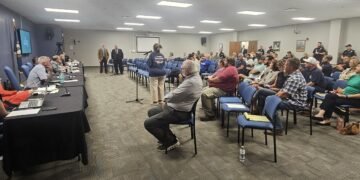
Henderson Municipal Power & Light hosted an educational presentation Monday evening about nuclear energy in Kentucky, and robust questioning from those in attendance, including local elected officials, veered into the topic of data centers, with local leaders asking state officials to implement regulations before data center companies try to locate in Henderson County.
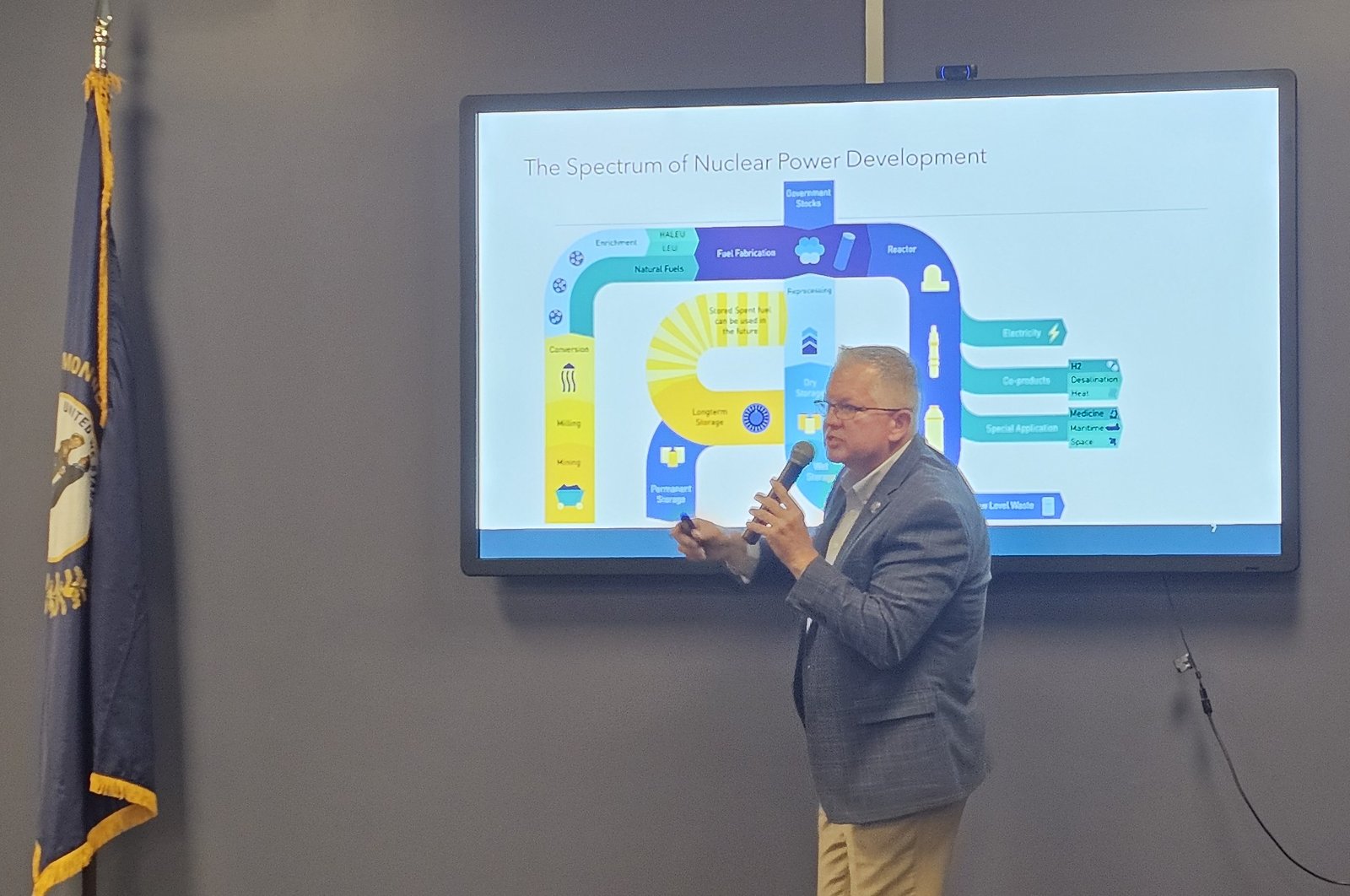
The educational session included a presentation by Paducah state Sen. Danny Carroll, who has been one of the General Assembly leaders in establishing nuclear power plants in Kentucky.
Carroll believes in a matter of years nuclear power plants will be located in the state. What form they take, especially in light of rapidly changing technology, is unclear, he said.
Carroll started off his talk saying that he believes nuclear energy will be the baseload supplier of power at some point in the future for the world, adding that maybe not nuclear fission but nuclear fusion.

Nuclear fusion occurs when two atom nuclei are combined—typically hydrogen—and form a heavier nucleus which releases a lot of energy in the process.
In fact, one of the nuggets from Carroll Monday night was that a cup of water contains enough hydrogen, that when using nuclear fusion, can power a city for years. That technology is not there yet, though, said Carroll and HMP&L General Manager Brad Bickett.
But both said it’s promising, with one company saying by 2030, it will be able to build nuclear fusion plants. This is more agreeable to many, both in the nuclear energy sector and everyday people, because fusion does not produce the spent radioactive waste that nuclear fission does.
Currently, there are 94 nuclear plants in the nation, all of them fission plants. Reactors under development are small modular reactors and microreactors.
Carroll predicted that nuclear plants would locate in Kentucky, though he didn’t predict what type of plants they’d be.
“In the next ten to 15 years, we will have nuclear power in Kentucky,” Carroll said.
He mentioned SB57, passed in the most recent state General Assembly, which establishes the Nuclear Reactor Site Readiness Pilot Program. In it, the legislature has set aside $75 million for nuclear plant site readiness—$25 million for each of three sites. From that $75 million investment, expectations are for a $30 billion return, Carroll said.
He said there are currently eight different locations that are vying to be one of the three sites named, though he didn’t name those locations, saying only, “I expect Paducah will likely apply.”
He said the three different sites will be located in three different regions across the state.
Bickett said that HMP&L won’t likely pursue construction of a nuclear power plant in the future. He said the local utility would be much more likely to partner with a different utility by offering funding for construction and then securing power from that plant for local use. Bickett said that could occur in a partnership with Paducah Power system, whose CEO Cory Hicks also spoke via video call at Monday’s presentation.
One often repeated message—from Carroll, Hicks and Cleve Reasoner, the CEO of nuclear power plant Wolf Creek Generating Station in Kansas—is that stigma surrounding nuclear power generation and its safety is not true today.
“The nuclear of the past is definitely in the past,” Hicks said, adding, “Those things don’t happen now.”
Carroll repeated through the evening that the safety culture of every nuclear facility he has toured is the highest caliber.
When the meeting was opened for questions, several elected officials present asked about data centers, the power those will use and what role nuclear power might play in those locating in the state.
Carroll responded that legislators are looking at making data center companies bear the cost of the power they use, which would include paying for building small modular reactors for their energy, if that is what they chose to do.
He went on to say that legislators are looking at other problems associated with data centers, including environmental concerns and the amount of water used to cool them, and those will get solved.
“We have to do it,” he said, adding later that the advantages and opportunities outweigh difficulties of data centers.
Henderson state Sen. Robby Mills, who was in attendance, also said that legislators are discussing a way that costs aren’t passed on to ratepayers. Mills also said that “energy is becoming our # 1 issue across the board.”


