


















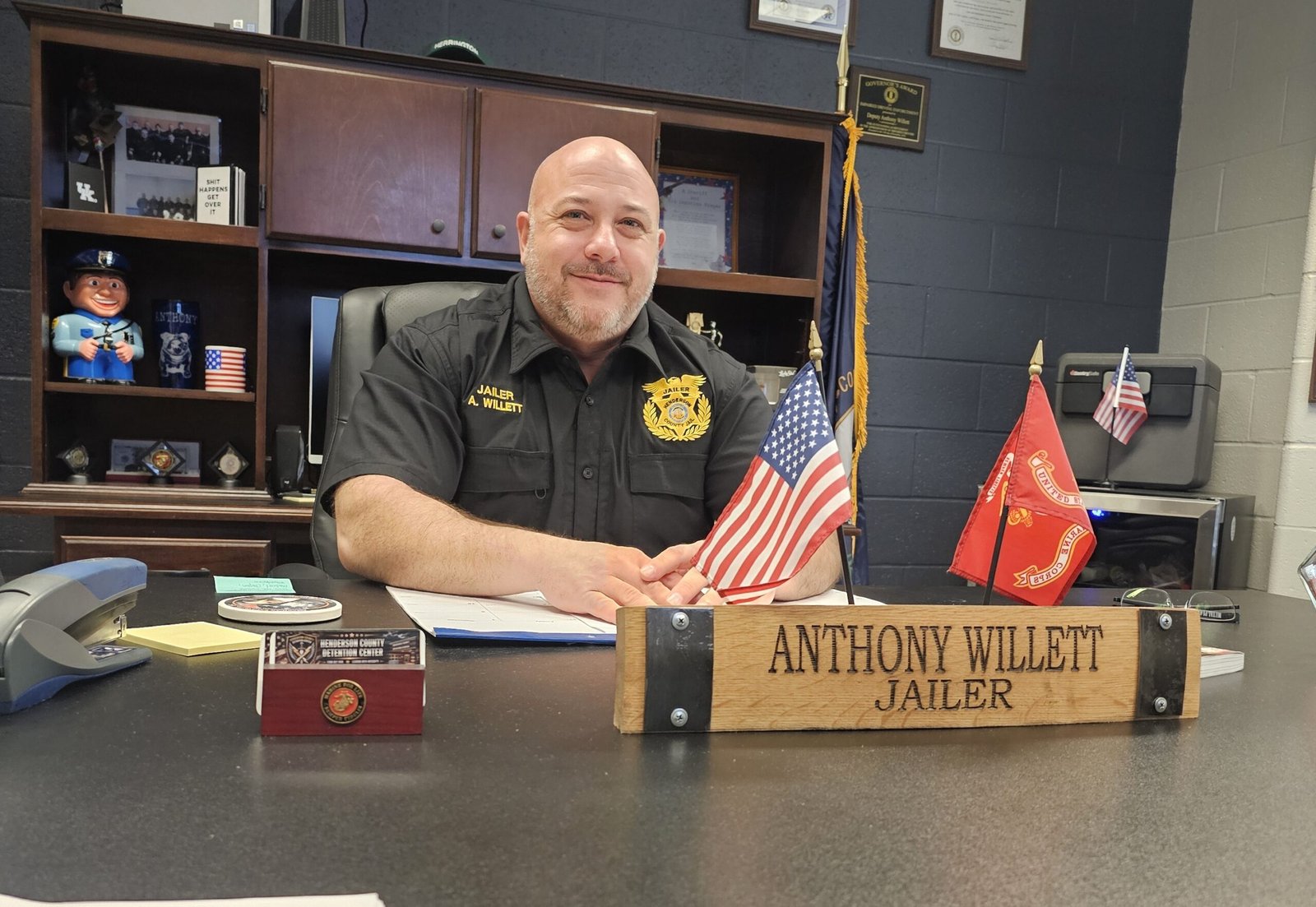
Henderson County Jailer Anthony Willett and his staff have made an abundance of changes at the jail since July 1, when the new jailer was sworn in to complete the last six months of the term of former Jailer Bruce Todd who retired in late June.
The Henderson County Detention Center on Monday released a long list of changes that have been made at the facility since Willett.
One of the first comments from Willett in a Tuesday interview with the Hendersonian was the implementation of an increased amount of training, which had been high on Willett’s talking points during the spring primary campaign.
Willett pointed to a total of 80 hours of training he has implemented for new hires. That’s up from the 16-32 hours that was required previously, and it also includes more hands-on training to better deal with inmates. That includes such skills as CPR and first aid, pepper spray and taser usage, use-of-force and the steps to go through, including training with de-escalation techniques, Willett said.

Willett said he’s asked deputies about some of the skills used in the job, and the response from some has been, “We saw it on a video but we’re never done it.”
On Monday, the jail made a post announcing the first class of four to go through the 80-hour Jailer’s Academy training. Willett said new deputies who have finished the training will shadow a field training officer working the floors within the jail for a week before they work the floor on their own.
He also has plans to increase training in the future, extending the Jailer’s Academy to four weeks followed by two weeks of shadowing a field training office. Additionally, the jailer wants to offer a higher, advanced training for those who have completed the first round or for veterans at the jail, and he foresees it will be a 24- or 32-hour training.
Another change involved staffing at the jail, specifically those in HCDC administration. Willett said most administrators were replaced, but nobody was fired.
“We didn’t fire anybody,” he said, adding that there were no pay cuts though some were moved to lower-ranking jobs.
Another top priority that HCDC has begun to make strides toward improving is to reduce recidivism. The jail recently hosted a program and invited local employers to talk about hiring inmates.
Willett said major roadblocks to just-released inmates include finding a job and then finding a way to get to the job. The biggest, though, he said, is to have housing upon being released. Many times, people just out of jail will return to where they were living before they were arrested, and often that puts them back in an environment that leads them back to jail.
So, he’s pursuing an HCDC-run second chance housing opportunity. Willett said there are a total of 100 beds in unused space of the driver’s license building next to the jail. He wants to convert that into second-chance opportunity housing, which would allow a living space for just-released inmates. They would be able to come and go as they please, but the jail would still provide food and transportation, if it was needed, he said.
The jailer is also interested in providing fatherhood and motherhood teaching programs for those who have been away from their children for years and will be returning to them upon release.
HCDC is also providing moral reconation programs, one of which—MRT Thinking For Good—has the goal of pulling inmates out of a criminal mindset and another—MRT Trauma—that helps them deal with past trauma, said Susanna Schaefer, who is the program facilitator. The Kentucky Department of Corrections notified the jail in late August that it could provide these programs starting Sept. 1, according to the jail’s Monday news release.
The release also said that the two new programs are in addition to 10 DOC-approved programs already offered at the jail, including Moral Reconation Therapy (MRT), MRT Mentor, MRT Anger Management, MRT Parenting, PORTAL New Direction, SAP Male/Mentor, SAP Female/Mentor, SOAR/Mentor, PSAP, Adult Basic Education,
Additionally, jail staff is working toward eliminating violations that were found by a federal auditor with the way HCDC runs its Prison Rape Elimination Act processes. Willett said there were 29 violations found. Much of the violations centered around how the PREA evaluations were being conducted at the jail during an inmate’s intake, he said.
The jail is correcting those—Monday’s release said 8 of the 29 have been fixed. If those aren’t fixed, it could risk the jail losing the ability to house federal inmates, said Chief Deputy Col. Joe Duncan. That would mean a loss of $2-$3 million, Duncan said.
Some of the changes are simple, like putting up correct signs, and others need a bit more work to get accomplished. But Willett believes that those will be corrected by September and the jail will be prepared for the federal auditor’s next visit, which will be in March.
Other changes include:
- The jail has brought down commissary prices, something officials say will help both inmates and their families. For example, previously a tube of Colgate costs $14. Other price decreases have occurred gift baskets that family members can buy for inmates.
- Another change involves not allowing inmates to move on their own through the hallways when they are going to different appointments within the facility. They now must be escorted by a deputy.
- Officials say morale at the jail has improved as well, which has been fueled by open communication among staff and administration. “I can relate to what they’re talking about,” Duncan said, because he’s been at HCDC since 1997 and worked his way up the ladder.
- The jail current has 75 employees. Willett said a full staff would be 91 employees. In the next budget cycle, he plans to get approval for funding to hire 16 employees, he said. Unlike other law enforcement related work, getting prospective employees to apply has not been hard. Willett said HCDC has applications, some who worked at HCDC in the past. “They want to come back to work,” he said.
“Together as a team we’ve done a lot,” Willett said of his first two months as jailer.


