
















Energy, energy, energy. It seems that’s all we’ve been talking about locally the past couple years. With good reason.
It’s full speed ahead, whether you like it or not, on planet Earth and energy is the driver. Walk into any public space and you’ll see a high percentage—maybe everyone in the room!—staring down at devices held in their hands, one of the reasons we need (maybe ‘desire’ is the more appropriate verb here) more energy.
Now playing on your hand-held device—energy eating AI, which has become so ubiquitous that even those opposed to it—or at least opposed to the energy required to run it—don’t seem to know they’re using it. One anecdote relayed to me was of a social media advertisement of some sort that was obviously made with AI that proclaimed to be against AI.
But beyond TikToks, there’s also the concern of national security, and a need to outcompete others in the world, namely China, in energy, technology and infrastructure, according to state Sen. Robby Mills.

More technology requires more energy production. But where will we put it?
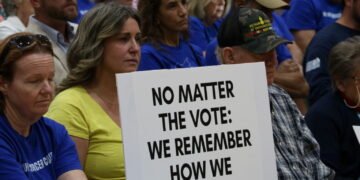
In Henderson County, at least, many are saying go away, and with good reason. Several Henderson County officials have said the county has done its part with 4,000-plus acres of solar panels covering land near Robards. They and hefty population of county residents want nothing more to do with renewables.
One couple I interviewed and wrote an article about will live out their twilight years sitting on their front porch looking at solar panels from all directions.
Recently, a few more energy-related issues that highlight the energy question have come up in the past couple weeks.
One example involves Henderson County Solar, a development that had been scheduled to start construction on June 15, but is on hold as I write this on Saturday. On May 29, the construction company that is slated to build the project that will encapsulate a total of 421 acres, WHC out of Texas, filed for a building permit from the Henderson County codes office. (WHC is the contractor hired by the project owner, Stellar Renewable Power.) But the codes department has not yet issued a building permit or any information about the holdup, though county ordinance states the codes department has two weeks from the date of the application’s submittal.
The project, when and if completed, is expected to provide 20% of the energy Henderson Municipal Power & Light would use in a year with rates locked in for the duration of the local utility’s 20-year contract with Stellar. No details on what the holdup is, though I’ve made calls to the county attorney and the county codes administrator that have gone unreturned and other officials I’ve talked to say they don’t know anything about the situation.
It’s a head-scratcher because up to this point, the local procedures in place have been in accordance with what needs to be done to get the project underway. The state-level Public Service Commission, however, scheduled a March hearing to hear about Stellar’s failure to notify the PSC of the transfer of ownership of the project and obtain approval of the previous owner’s construction certificate. Although the PSC ultimately ruled Stellar was in the wrong, it did allow the project to continue if Stellar followed eight measures laid out by the PSC.
The last mention of it publicly was at June 9’s Henderson Fiscal Court meeting, when Stephen Land, the vice president for development for Stellar Renewable Power, got up to speak about the issue. He was told by County Attorney Steve Gold that this is not the place to ask about it and the attorney representing Stellar and another attorney the county has hired to assist with renewable energy issues, Mac Johns, along with Gold, are discussing it. Stay tuned for that decision.
Another issue moving to the front burner is a moratorium on data centers in Henderson County. Currently, there’s no moratorium locally, but Henderson City-County Planning Commission Executive Director Brian Bishop told the Hendersonian he’s contacted both city and county leaders and informed them he’s working on a draft ordinance for a data center moratorium. There’s been no discussion, though, if or when the city or the county might originate a moratorium and send the item to the planning commission for a public hearing, Bishop said.
To understand the conflict surrounding data centers, just look to other municipalities in Kentucky currently dealing with companies trying to locate data centers in their towns or counties. One of the troubling issues coming out has been the veil of secrecy that that seems to cover these developments, including non-disclosure agreements, as they attempt to get set up in a community.
Of course, the clandestine nature of economic dealings are the norm when companies are looking to move to a town—the refrain I’ve always been told is that they’d lose a competitive advantage if other companies knew their plans. But with data centers, there’s more at stake than a big box store’s business plan. They use a whole lot of water to cool, there are environmental and noise concerns, and probably most importantly to regular folks’ pocketbooks, utility rate increases have been passed on to ratepayers because of the massive amount of energy needed for a data center to operate.
State leaders have said they won’t let ratepayers take on the added costs of utilities associated with a data center.
And, at a June 15 public meeting in Henderson, Paducah state Sen. Danny Carroll said the benefits of a data center outweigh the negatives and that state officials will find solutions to the water and environmental issues surrounding them.
“We have to do it,” he told a group mostly made up of local leaders.
(A quick aside–officials I’ve spoken to say local leaders have told data center companies that this community isn’t interested.)
Finally, the June 15 meeting’s main topic wasn’t even about data centers—it was nuclear energy and a push for nuclear power plants to one day locate in Kentucky. According to officials that night, nuclear energy production in the state is years away, but certainly something that will happen somewhere in the state.
Whew, wipe the sweat off your brow—and that’s just in recent weeks. To look further back, check out the Hendersonian’s website at www.the-hendersonian.com, go to the magnifying glass search bar and type “solar” or “WECS” or “renewable” or any other such term. You’ll get pages of articles concerning energy issues in Henderson County in the past three years. There will be more–lots more.
The tangled web of energy production and usage will certainly remain convoluted for many years to come. We all seem to want to hold energy output in the palm of our hands but decry energy production anywhere near our homes. And if you take both the all-of-the-above approach to the type of energy to use and believe we need more energy, then there are going to be more proposals for all types of energy production and groups of people in every pocket of the country ready to oppose them.
It begs the simple question: Where will we put our energy producing installations and plants?
The answer, though, won’t be simple, as we’re seeing in Henderson County.
Next up: The Henderson City-County Planning Commission will hold a public hearing concerning regulatory and administrative framework at 6 p.m., Wednesday, July 15, in the Fiscal Court Courtroom. The meeting involves property values of residences and other parcels located near wind turbines. It is the third of seven scheduled meetings that will ultimately lead to the creation of a wind energy conversion system ordinance.


